
Georgetown’s Medical Scientist Training Program Is a ‘Pretty Monumental Milestone’ for M.D./Ph.D. Studies
Georgetown University is now host to an NIH-funded Medical Scientist Training Program (MSTP), placing the medical school in prestigious company as one of 59 MSTPs, and the first in Washington, D.C.
The NIH predoctoral T32 grant announced to the School of Medicine community on August 5, 2026, will support M.D./Ph.D. students, allowing the School of Medicine to expand its dual-degree enrollment and provide new academic resources. It’s a reflection of Georgetown’s excellent record of training students to integrate clinical care with research in biomedicine and especially in bioethics, program leaders said. Georgetown has trained more than 100 M.D./Ph.D.s since 1989, with graduates going on to tenure-track positions at universities including Stanford, the University of California San Francisco, and Johns Hopkins.
The announcement from Norman J. Beauchamp Jr., Executive Vice President for Health Sciences and Executive Dean of the School of Medicine, and Anna Riegel, Vice President for Research and Vice Dean for Biomedical Graduate Education (BGE), said: “This achievement reflects decades of commitment by faculty, students, staff and alumni who have built Georgetown’s physician-scientist training program through outstanding scholarship, mentorship and collaboration. Together, we are preparing leaders who will advance health through discovery, inspire hope through innovation, and bring healing to patients and communities around the world.”
Advancing Research and Care
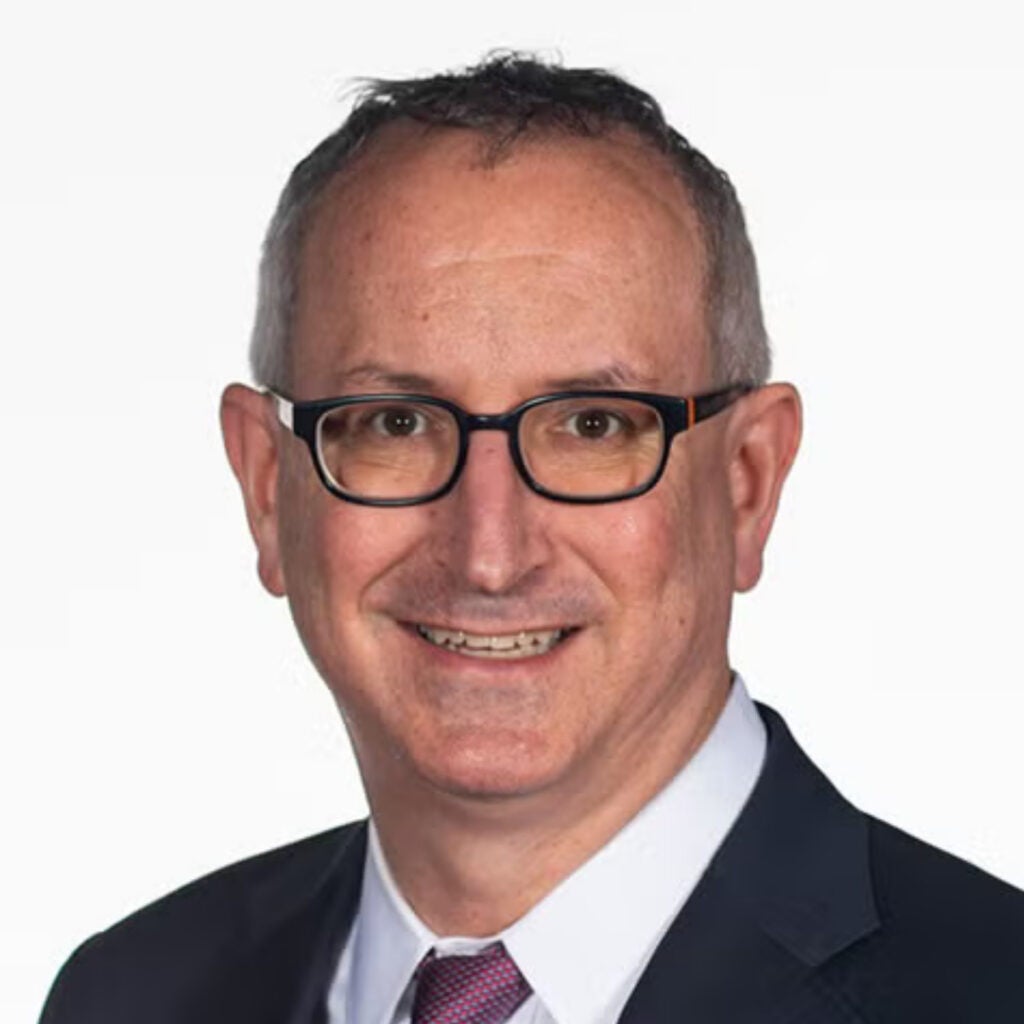
Todd Waldman, M.D., Ph.D.
M.D./Ph.D. students supported by the MSTP will be doing research in several disciplines: neuroscience, pharmacology and tumor biology within the BGE umbrella, as well as philosophy. The added funding is especially welcome in light of increased student interest, said Todd Waldman, who has served as M.D./Ph.D. program director since 2010 and is the principal investigator for the MSTP grant. Since Waldman took charge of the M.D./Ph.D. program in 2010, yearly applications have risen from single digits to almost 300.
The MSTP is “a pretty monumental milestone for our institution,” Waldman said. “It signals that we are in the same class as the world’s very best academic medical centers, and is a validation of our ongoing upward trajectory.”
“[MSTPs] are very competitive grants,” Riegel said. “Getting the MSTP reflects the strength of our medical school and our BGE graduate programs, and in particular how they can interact to enhance biomedical research.”

Daniel Sulmasy, M.D., Ph.D.
One factor that made Georgetown stand out as an MSTP candidate is its unique strength in the field of bioethics, university leaders said. The Kennedy Institute of Ethics, established 1971, is among the oldest academic ethics centers. And members of the Pellegrino Center for Clinical Bioethics teach medical students and provide consultation services at Medstar Georgetown University Hospital. Kennedy Institute Director Daniel Sulmasy, André Hellegers Professor of Biomedical Ethics, will serve as associate director of the MSTP and work with M.D./Ph.D. in Philosophy students.
“Georgetown has one of the premier programs in bioethics in the world,” Sulmasy said. “It’s already infused into our [medical] curriculum through the Pellegrino Center; we have an excellent ethics consult service, and medical students are able to do electives. [The MSTP] takes it a step further and says we’re going to find these select and incredibly talented people who are going to be running bioethics programs like this in other universities” – as many Georgetown alumni already do.
Bioethics topics for Georgetown students might include new insights into old problems, such as brain death; questions about emerging technologies such as artificial intelligence (AI), brain implants and gene manipulation; and challenges of healthcare resource distribution and justice, Sulmasy said.
M.D./Ph.D. in Philosophy students will work at the confluence of research and clinical care, with opportunities to teach medical students and assist with ethics consults, translating theory into better outcomes for patients. Their contributions will echo the commitment of Dr. Edmund D. Pellegrino, the founding director of the center that now bears his name, to sustaining the role of philosophy and the humanities in medicine and medical education.
Scholars Eager to Make an Impact
In the 8-year M.D./Ph.D. program, students move back and forth from medical to research studies: They complete three pre-clinical semesters of medical school, then perform Ph.D. research and defend a dissertation before returning to med school for clinical education. The MSTP covers a mix of new M1 medical students and M2 students who will switch to their Ph.D. programs in the spring.
BGE asked three MSTP students about their interests and goals as they prepared to mark the beginning of their medical studies at the School of Medicine’s White Coat Ceremony on August 7.
Julia Gauffreau (G’32, M’34)
M.D./Ph.D. in Pharmacology & Physiology
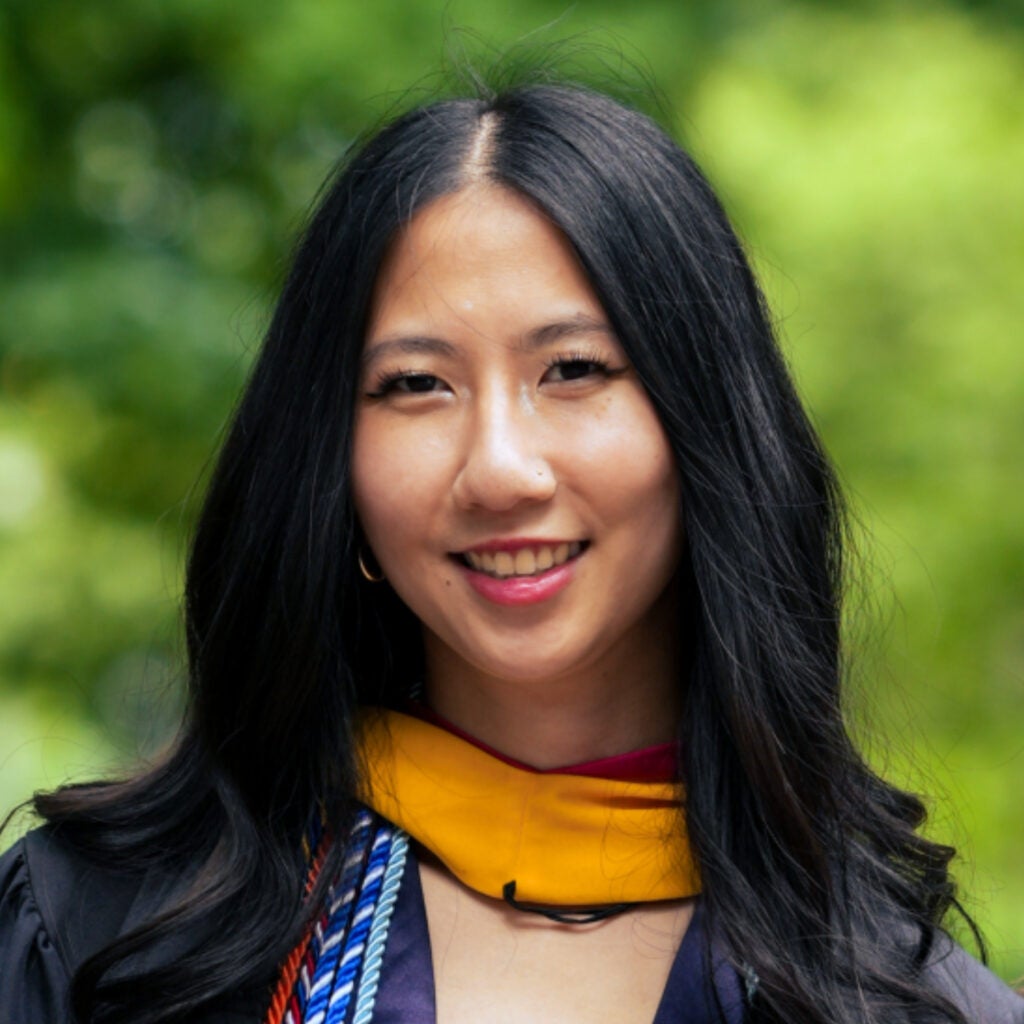
Julia Gauffreau
Julia was drawn to doctoral studies in pharmacology after working on medicinal chemistry projects as a bachelor’s and master’s student in the Roy & Diana Vagelos Program in the Molecular Life Sciences (Vagelos MLS) at the University of Pennsylvania. Georgetown caught her attention thanks to the med school’s Clinical Medical Spanish Track, as well as the ethos of cura personalis (care of the whole person).
“I did a lot of work with homelessness resource centers while I was at Penn, and doing medical volunteering on that front, and so Georgetown’s commitment to service really spoke to me,” Julia says.
While she’s starting her doctoral studies on the medical side, Julia has already spoken with research faculty ranging from biophysics and biochemistry to applied biology to learn about opportunities.
The new MSTP “really aligns with my own goals, because long-term, I hope to be in the academic medicine space,” Julia says. “Having research, investigation and education in my career is really important to me, and a large motivation also to why I want to do an M.D./Ph.D. … I’m really excited about having those additional [MSTP] resources, and hopefully that additional network shared within the class of schools that have MSTP grants.”
Cara Lewis (G’32, M’34)
M.D./Ph.D. in Philosophy

Cara Lewis
Cara is an aspiring “physician-philosopher,” interested in the neurological “how” and the philosophical “why” of how humans care for one another. The Dartmouth College alumna hopes that Georgetown’s MSTP will help to cement the role of bioethics in helping the medical profession to adapt to current and future challenges.
“These distinctions of humanities [versus] sciences aren’t as clear as we would like to believe they are,” she says. “Just as we can’t have good vaccines without the pharmaceutical and chemistry research going in it, we can’t have good policy and ethics without developing the philosophical tools that come before. … If we just stick with applied bioethics, it’s just rules, and the rules are only so flexible as the things we can imagine. But if we develop the tools, we can encounter new situations that we can’t even imagine right now, and be better equipped for them.”
Before the White Coat Ceremony to start the academic year, Cara attended a retreat with fellow new medical students at Campus Ministry’s Calcagnini Contemplative Center in Bluemont, Virginia.
“That was the perfect introduction to medical school for me,” Cara says. “It was lovely to hear about people’s goals, about the meaning they find in medicine, or their role models, and who they want to be.”
Stephen Vaughn (G’32, M’34)
M.D./Ph.D. in Neuroscience
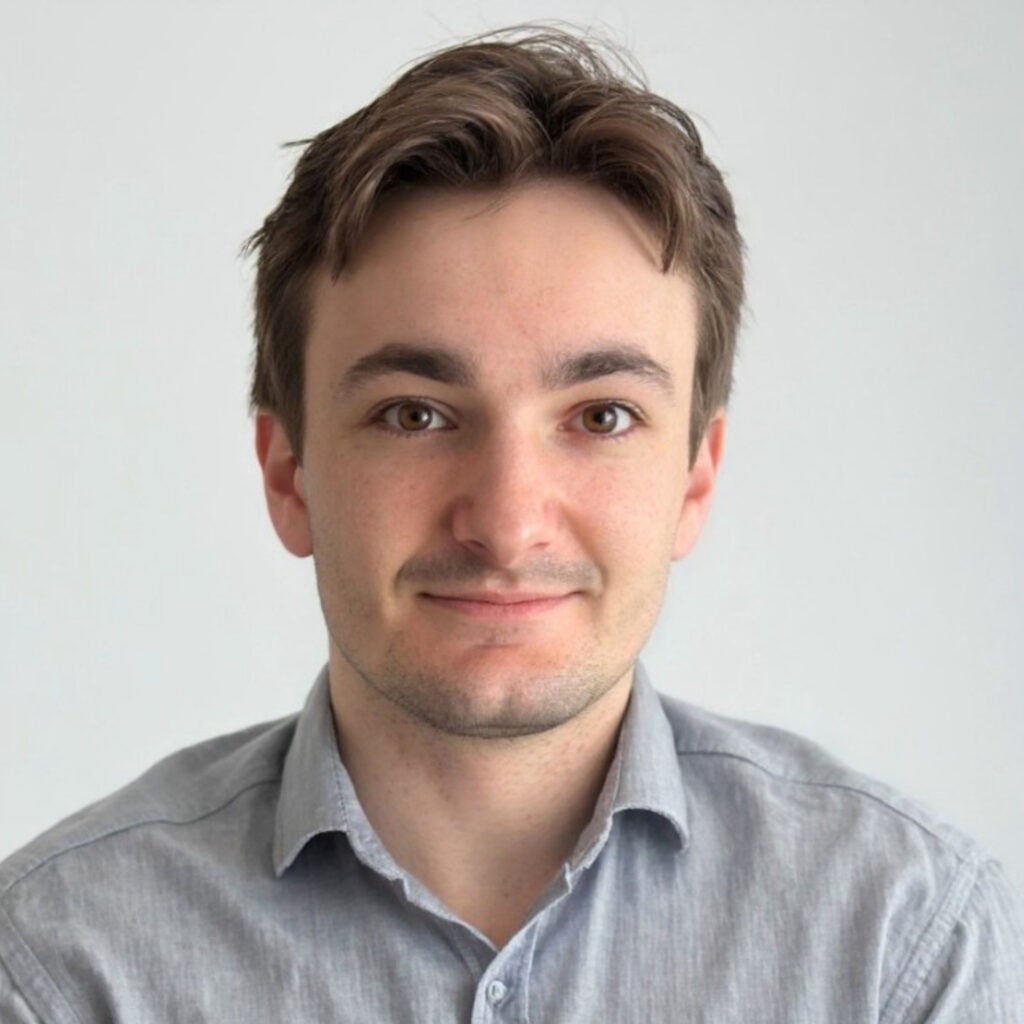
Stephen Vaughn
“I decided to pursue [a] M.D./Ph.D. because I couldn’t envision a life for myself without both research and treating patients,” says Stephen. Lifelong interest in brain health drew him to a bioscience program at the University of Limerick in Ireland, and now to Georgetown, where he looks forward to the university’s “cutting-edge neuroscience research” as well as its “holistic approach to medicine.”
“The philosophy of cura personalis was particularly important, as I have some personal experiences seeing the ways in which the seemingly disparate conditions a family member faced compounded, causing life-threatening complications from two treatable conditions,” Stephen says. “That experience reinforced how vital it is to seek a comprehensive understanding of one’s patients, from their seemingly random other conditions, to their goals, lifestyle, and beliefs. What works for one patient will often need to be adjusted for another.”
When it comes time to pick a research focus, Stephen hopes to draw from his computational and wet-lab experience in researching neurological diseases. He says he is honored to be part of the MSTP and uphold the expectations it brings with it.
“Albeit indirectly, I am being funded by the American public with the expectation that my contributions to science and healthcare will outweigh the significant investment that my training will take,” Stephen says. “I aspire to live up to that promise, and I wholeheartedly believe that Georgetown’s MSTP will enable me to become the best physician-scientist I can be.”
Georgetown M.D./Ph.D. Students in Action
Browse More M.D./Ph.D. Stories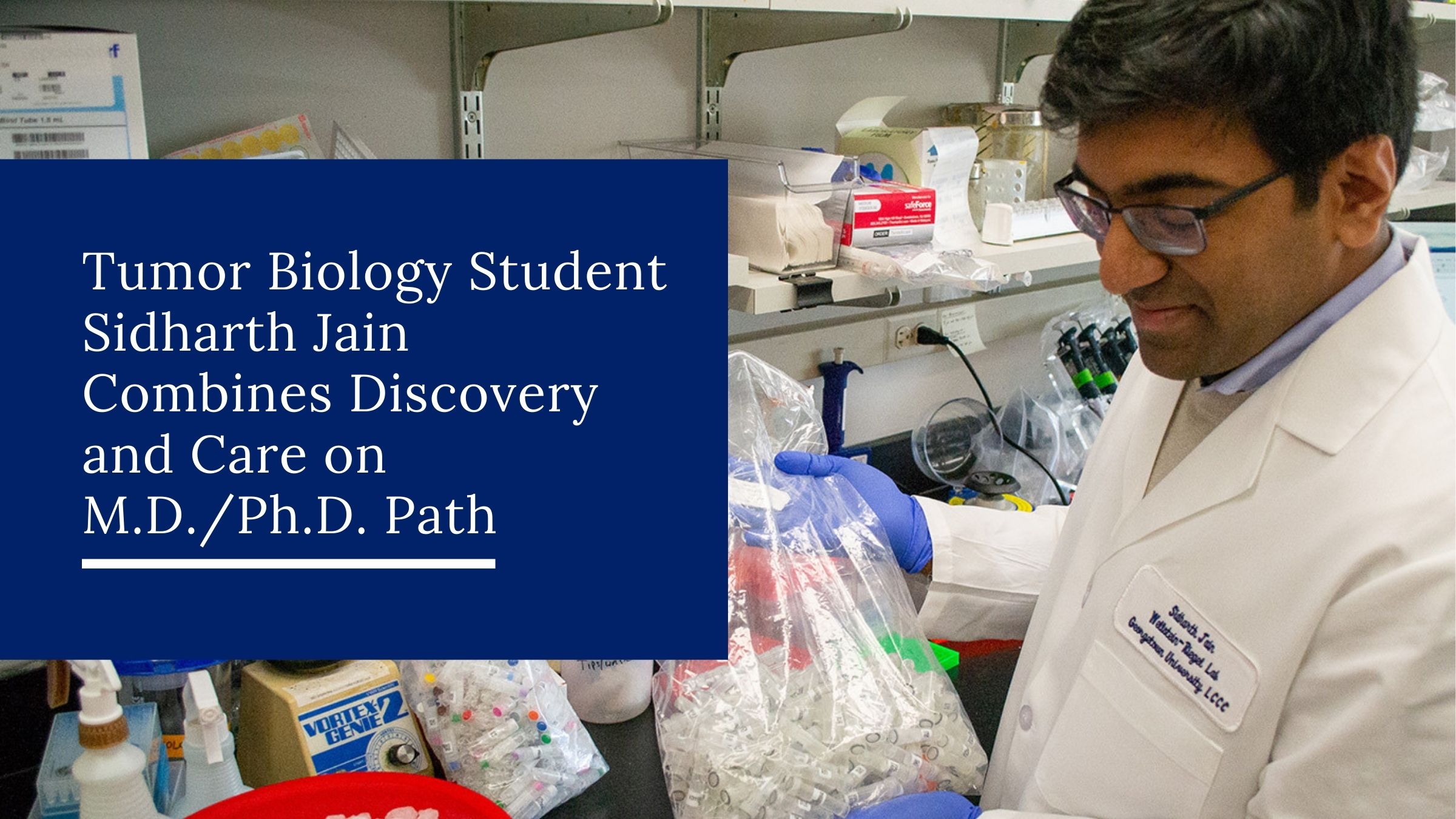
News, Student Profiles
Tumor Biology Student Sidharth Jain Combines Discovery and Care on M.D./Ph.D. Path
Sidharth Jain hopes that his experience at the lab bench and the bedside will help him to be an insightful researcher and compassionate clinician. As part of a melanoma research group, he is already working to make a difference in the diagnosis and treatment of cancer.
January 13, 2025
News, Student Profiles
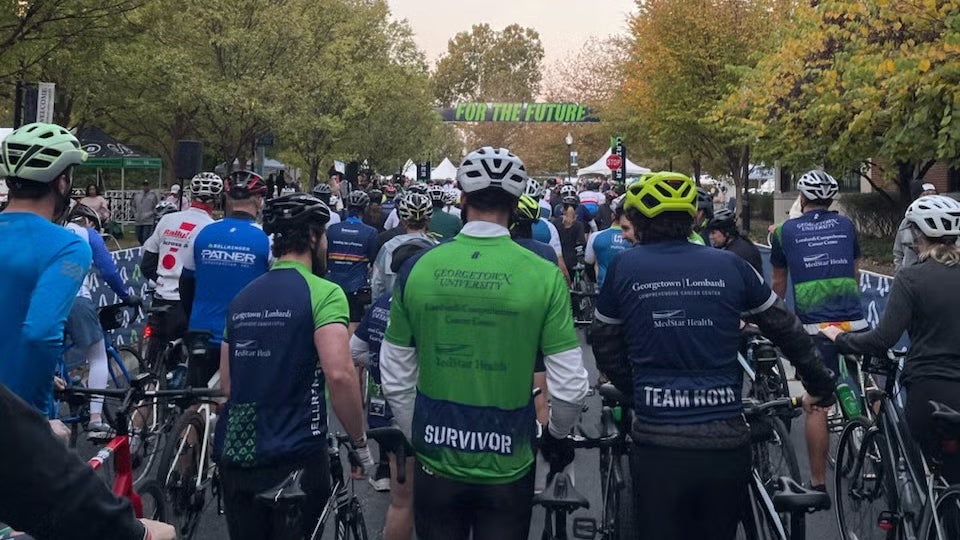
Months After Chemotherapy, M.D./Ph.D. Student Bikes 50 Miles for Cancer Research
A year and a half into medical school at Georgetown, Bryan Weselman was diagnosed with cancer. Now, he’s researching cancer to improve treatment for other patients.
November 8, 2024