
Giving an Effective Presentation: Student Research Day Winners’ Advice
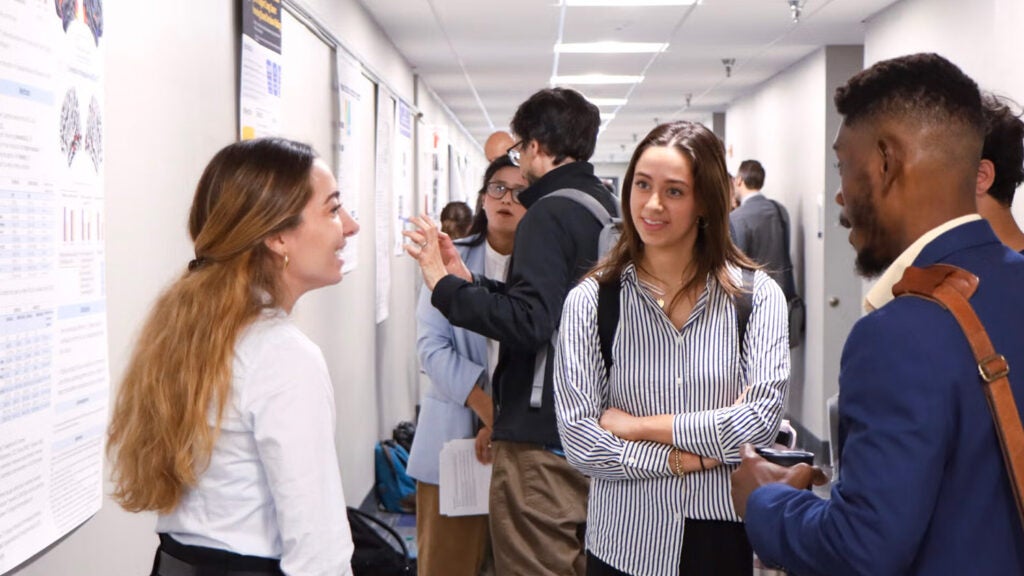
Student Research Day is an annual opportunity for BGE Ph.D. students to show off their work to biomedical peers, faculty, and the university community at large. Whether it’s a student’s first time speaking publicly about their research or their last presentation before finishing their studies, Student Research Day has something to teach every presenter about communicating science, getting feedback, and sparking new ideas.
BGE interviewed the three winners of the latest Student Research Day, held in October 2025, about their projects, their presentation strategies, and their advice for student presenters.
Jump To:
- Micaila Curtis, Biochemistry and Molecular & Cellular Biology
- Makheni Jean-Pierre, Microbiology & Immunology
- Daniela Cozzi, Pharmacology & Physiology
Micaila Curtis
Biochemistry and Molecular & Cellular Biology ’25
Mentor: Stella Alimperti
1st Place Oral Presentation (Tie)
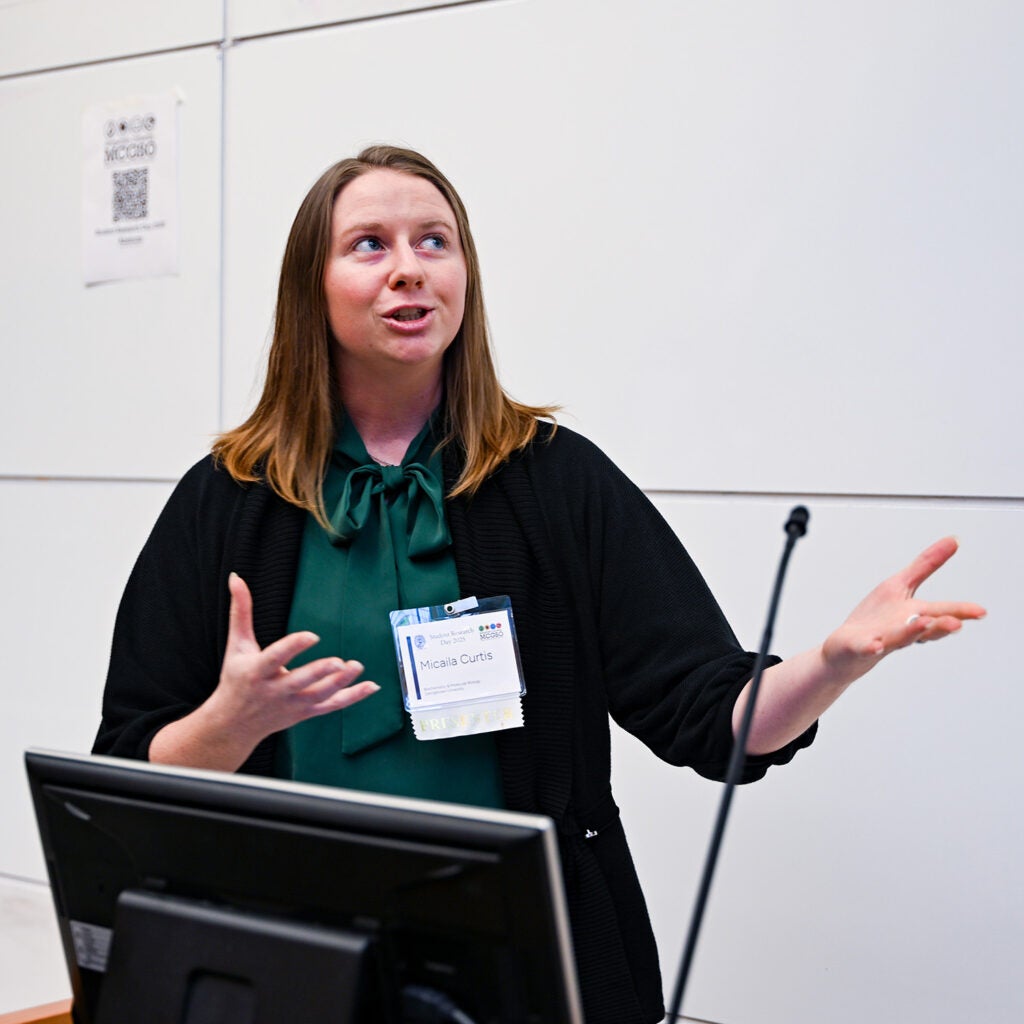
Micaila Curtis
Student Research Day came the week before Micaila Curtis’ dissertation defense, so she decided to treat it as a rehearsal before facing her thesis committee. Her research is on the ability of vitamin C to potentially counteract the effects of glucocorticoid steroids, which can cause the bone-weakening disease osteoporosis when taken long-term. Curtis successfully defended her dissertation and is off to the next stage of her career!
BGE: Tell us about your research.
Micaila Curtis: My research focuses on bone tissue regeneration with the use of ascorbic acid or vitamin C, and my presentation was focusing on how that mechanistically happens through the collagen within the bone extracellular matrix. … We showed that in both intracellular, but also in an acellular matrix, [that] the ascorbic acid is also contributing to improving the biochemical and mechanical properties of the collagen itself, which then supports better tissue regeneration.
In the research that we have found, at least for the scientific literature, there were no pharmaceutical recommendations for the use of vitamin C in glucocorticoid-induced osteoporosis. It is very well established that vitamins such as vitamin D are important for your bone health. However, it is only recently that they started even looking at the use of vitamin C, including alongside the use of vitamin D, for your bone health, and they showed that it does have a much more robust impact on supporting bone health and recovering some of those disease states.
BGE: Vitamin C would be easy for patients to take. What is it like to work on a topic that could potentially have such an immediate impact?
MC: I am not a medical doctor so I am unable to provide clinical recommendations. So, the best that we can do is hope that our literature gets published and physicians are able to recognize Vitamin C’s positive importance to bone health, especially for osteoporosis and long-term use of glucocorticoids.
I think it’s very hopeful to have an immediate impact, though. … Our research has shown mechanisms proven to support patients’ bone health, and in a very easy, highly accessible way, relatively cost-efficient, so it’s very exciting to work on. … I’m from a rural area, and so it’s exciting to find support for patients that they can afford and easily access.
BGE: In 2023, you won first place poster presentation at Student Research Day. What was it like to give an oral presentation this year?
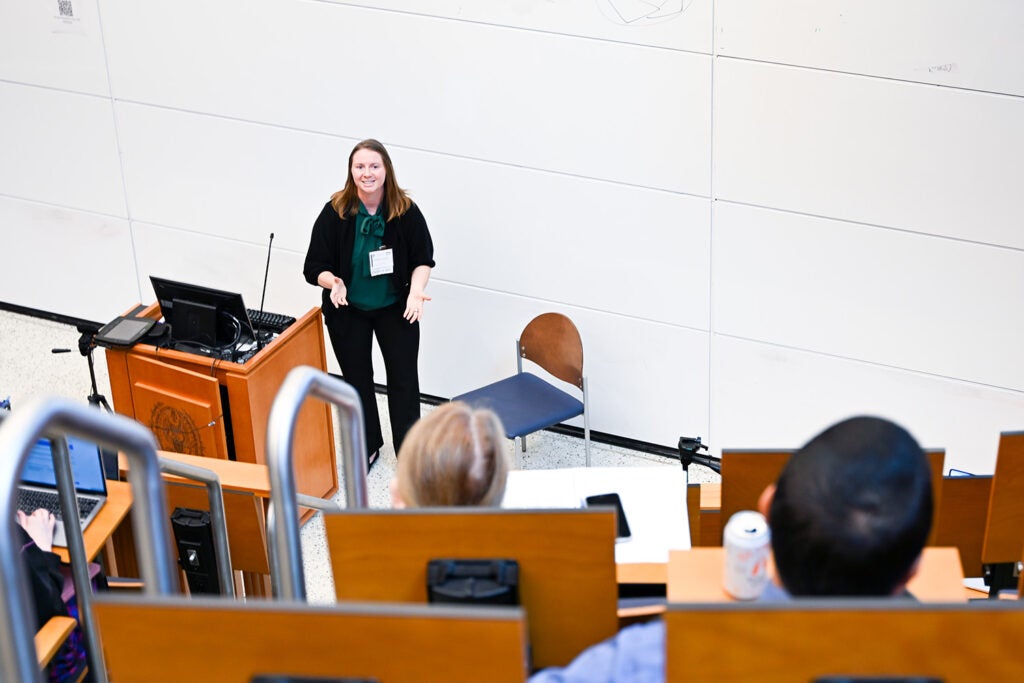
MC: Seeing how much information I had, it made sense to me to move to the oral presentation, [and] also as a way to prepare for my defense and get more questions. I love getting questions and ideas, and also just being challenged. I think that that’s an important part of science, and it makes me very happy when people are like, “Oh, I don’t agree with that,” or “I don’t think that this is how that works” – and it’s like, well then, I’m going to have to do some more research! To me, that’s a very exciting exchange, for example, to be told, hey, maybe you should consider changing this aspect, or focus on this disease as well. At the end of the day, no matter how knowledgeable someone is, we don’t know everything, and so it’s vitally important for us to be able to take that feedback from other people and perspectives, and I do feel you get a lot more of that interaction through oral presentations.
BGE: What’s next for you after your upcoming dissertation defense?
MC: I have an acceptance for medical school. … and offers to start a post-doctorate as well.
BGE: What is your advice for student presenters?
MC: Since I’ve been in this specific lab, my mentor has had me at 20 different conferences throughout the past two years. Some of those have been international, some of them have been institutional, and I think getting used to doing your elevator pitch – that’s the most important thing. So, strategically, I think starting from your one sentence of what the impact of your research …then focus on that throughout the rest of explaining the different points, like, how that relates back, and make it easy to explain where you’re coming from.
[I want to encourage] more students to get out there and show their research, even if they feel like it’s not fully ready. Something that definitely has helped me over the years is just being encouraged to do the most with what you have, and I think people would be surprised!
And it does prepare you. … This week, I’m not stressed about my defense, because I intimately know everything, especially since I’ve presented it so many times. At the end of the day, presentation skills, from lab meetings to conferences, are very translatable to better science and being able to portray your thoughts and the facts for everyone to comprehend.
Makheni Jean-Pierre
Microbiology & Immunology ’26
Mentor: Eric Van Dang, National Institute of Allergy and Infectious Diseases
1st Place Oral Presentation (Tie)
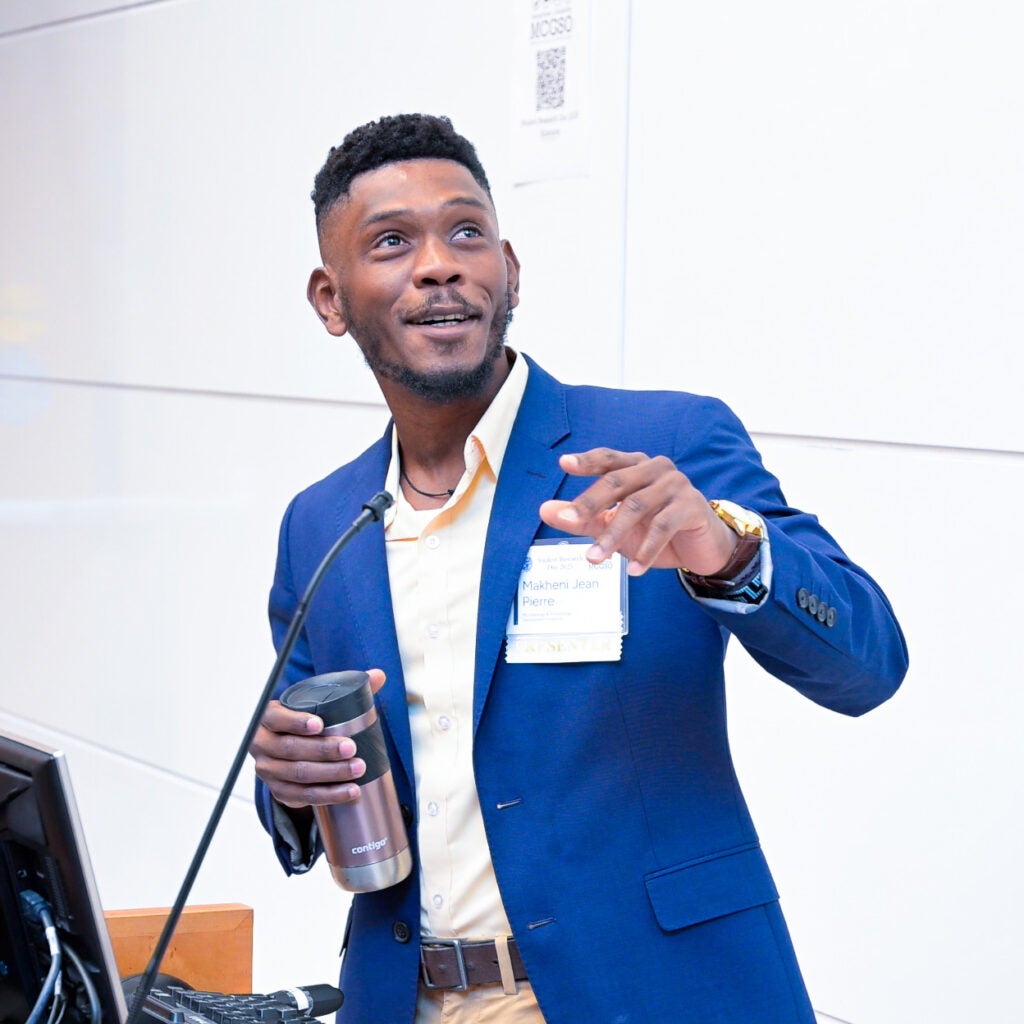
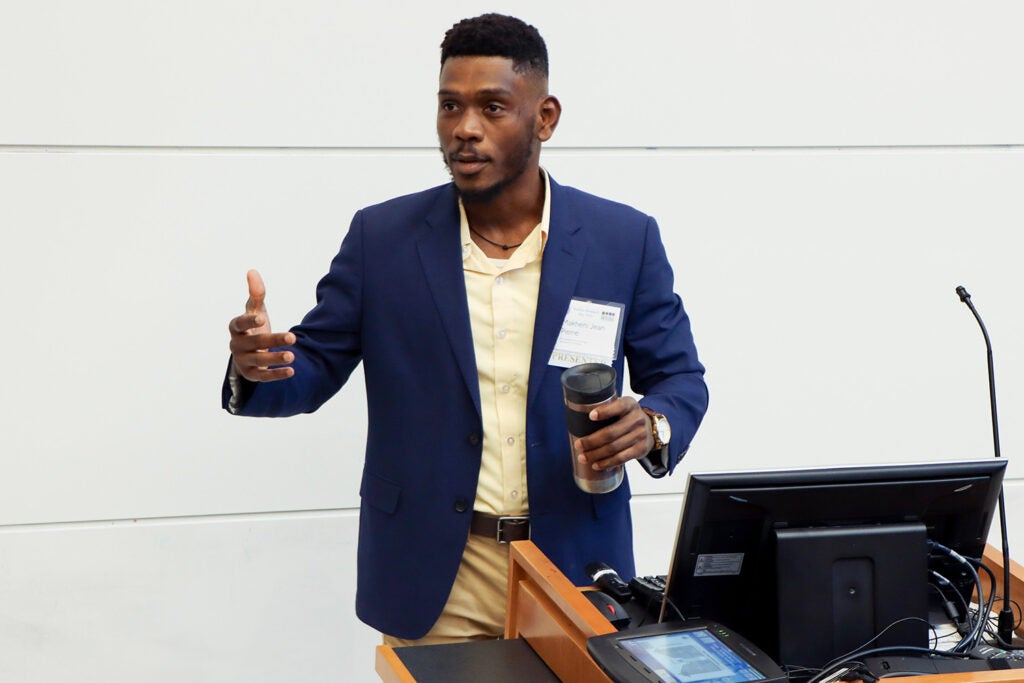
Makheni Jean-Pierre
Makheni Jean-Pierre is a devoted researcher, combining his studies in the Microbiology & Immunology Ph.D. program with years of experience as a researcher at the National Institute of Allergy and Infectious Diseases (NIAID). Jean-Pierre started at the NIH institute as an undergraduate in 2019 and has continued as a postbaccalaureate scientist and now as a predoctoral fellow through the Georgetown-NIH Graduate Program. At Student Research Day, he spoke about how certain proteins in the immune system, interferon-gamma cytokines, work to control the body’s response to Cryptococcus neoformans fungal infection, the most common cause of fungal meningitis.
BGE: Tell us about your research.
Makheni Jean-Pierre: In our lab, we are focusing on trying to understand how [a] fungal pathogen affects pulmonary normal function. My side of the project is to try to address the question of how type 1 immunity is actually effective against fungal infection. There are other projects that [focus] on type 2 immunity, which is detrimental.
For my project, the main observation that we have found is that there seems to be a population [where] all of a sudden they have macrophages that require type 1 cytokines just for their survival, but not their inflammatory output, to promote protection. So, it seems that the interplay between type 2 and type 1 immunity is driving the function of those cells in two different ways, where type 2 is suppressing those cells, type 1 is promoting the survival of those cells, and those cells by themselves have an intrinsic protection against the fungal pathogen.
The pathogen we’re using, it’s only pathogenic in the setting of immune compromisation. What we use is a mouse model that is immunocompetent, and we try to observe this immune response toward the pathogen upon infection. … This is the normal course of response we see against the pathogen. But when you take type 1 immunity away from the mouse … then they become susceptible, and they succumb to the infection. So we assume it’s the same logic for human infection, because in humans [the fungus is] a commensal, but it’s in the context of people that are immunocompromised due to HIV infection, or that are on chemo, that are on immunosuppressants, that become more susceptible to developing a cryptococcal infection.
BGE: Why did you decide to present at Student Research Day?
MJP: I never liked presenting, and then one day my PI told me the point of presenting is to actually show your data and get feedback from people. For me, I’d always thought it’s just go and then show what you’re working on, and that’s it. … Ever since he told me that, I decided to present everywhere.
[At Student Research Day] we got some good discussion, mostly with the judge and the students after.
BGE: What has it been like for you to pursue your Ph.D. at Georgetown while also doing research at the NIAID?
MJP: I had to study at Georgetown, then also do a rotation in Dr. Catalfamo’s lab. I got to balance that pretty well with the knowledge that I would also choose a lab at the NIH. Actually, it took pressure away from me from doing my rotation at Georgetown, which was fun.
At the NIH, I feel more more like a postdoc, because you have a lot of independence and everything that keeps you going is your discipline and your motivation.
[After graduation] it’s going to be time for me to move away from the NIH. I could always come back, but once I graduate, I want to travel for one year, going everywhere. … And then probably do a postdoc in an overseas country for one year, do a fellowship, discovering all the culture, the way of doing science.
BGE: What is your advice for student presenters?
MJP: [Making an outline for the presentation ] and going over my outline with my PI helps a lot, gives me more ideas. And as you’re setting up the presentation, always think about how long it takes you to go to each slide, and then how clear it is.
For example, for me, I know one thing that I hate is having too many graphs on one slide. I lose focus. … So, in all my slides, you would probably never see two graphs, unless they go together, and they absolutely must. So, avoid crowding the slides, keep it as clean as possible, and take your time to explain.
I’m very enthusiastic about things that I really like, and when I go give a presentation, I assume nobody knows anything about what I’m going to talk about, so it becomes [an opportunity] for me to try to explain as clean as possible, and challenge myself to make it as comprehensible as possible to everybody. So that’s why you’ll always see me happy when I present.
Daniela Cozzi
Pharmacology & Physiology ’28
Mentor: Gerard Ahern
1st Place Poster Presentation
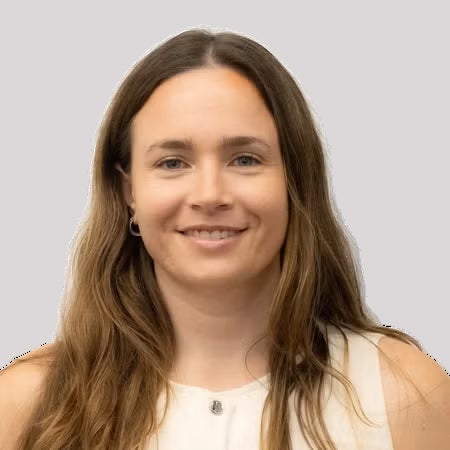
Daniela Cozzi
Daniela Cozzi was new to poster presentations at this year’s Student Research Day, but she came with experience in communicating science through her recent internship at the Coalition for Aligning Science, a Maryland-based advisory firm. Her first-place finish for her presentation on nicotine-induced vascular dysfunction from e-cigarette use was a welcome achievement, as she is considering a post-graduation career in science consulting and communications.
BGE: Tell us about your research.
Daniela Cozzi: Our lab studies vascular dysfunction, and my project focuses on the role of Transient Receptor Potential (TRP) channels, specifically TRPA1, in pulmonary hypertension. We use calcium imaging and electrophysiology to understand how these channels behave in pulmonary artery smooth muscle cells and whether they contribute to pathological vasoconstriction. Ultimately, we hope they could serve as future therapeutic targets.
We’re also interested in how electronic cigarettes, also known as vaping, are widely used, especially among teenagers. While it’s marketed as a safer alternative to traditional cigarettes, nicotine still has significant physiological effects. My project builds on growing evidence that nicotine exposure may contribute to vascular dysfunction.
BGE: Why did you decide to present at Student Research Day?
DC: This was actually my first poster presentation. I’ve watched many colleagues do it, and they always said it’s one of the best ways to practice communicating your work to people outside your own lab.
I wanted to become more confident in sharing my research, introduce others at Georgetown to the work our lab is doing, and connect with undergraduates or master’s students who might be interested in joining. I also enjoy hearing questions from people with different backgrounds – they often spark new ideas or directions to discuss with my PI.
Our program does weekly seminars where I’ve presented before, but a poster presentation felt like an important next step in developing my communication skills.
BGE: What do you want to do after earning your Ph.D.?
DC: During my internship, I became interested in exploring career paths beyond the traditional academic route. The advisory work demonstrated how scientists can contribute at a strategic level by communicating research, identifying emerging areas of investment, and shaping the broader context of scientific innovation. I enjoyed those aspects and am interested in exploring consulting-focused roles, while remaining open to other directions as I continue my Ph.D. training.
BGE: What is your advice for student presenters?
DC: Think about your poster as a story. It should include the key details but also be understandable to someone who isn’t an expert. The goal is clarity, not overwhelming the reader.
Formatting matters, too. Clean, visually appealing posters are more inviting. People want to be able to follow your logic at a glance, then speak with you to get the deeper details. You don’t need paragraphs of text; you already know the science.
Finally, ask others to review your poster before printing. Fresh eyes can tell you if something is confusing, cluttered, or unclear. Getting feedback early makes a big difference.
Read More About Student Research at BGE
More BGE News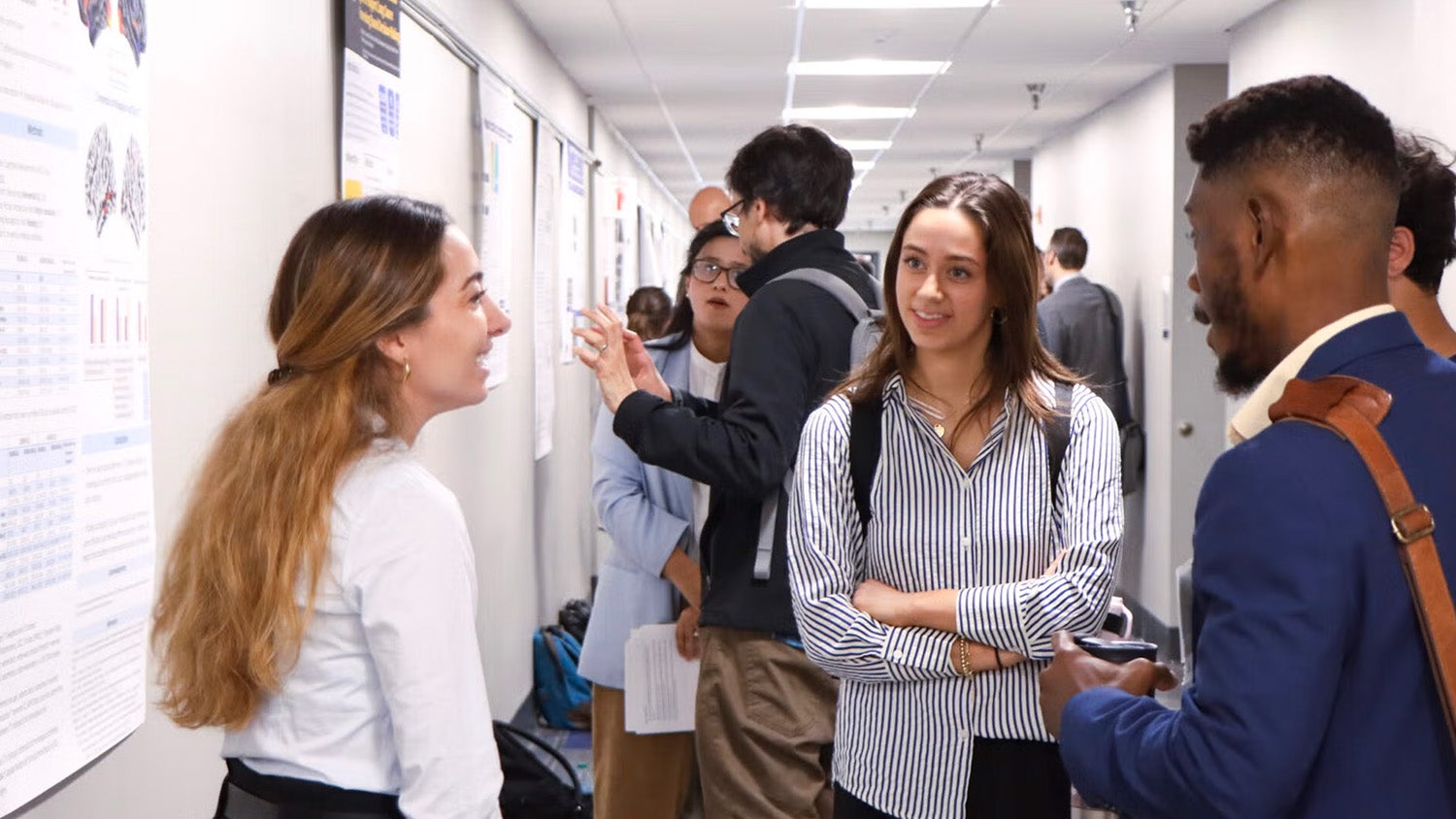
News
Student Research Day Celebrates 40th Year at Georgetown
The event featured 18 student presenters from six different BGE programs, all vying for a top placement in the oral and poster presentation competitions. Attendees from across Georgetown gathered in the Medical and Dental Building to hear how their peers are investigating the causes of neurodegenerative diseases, improving cancer screenings and treatment and much more.
October 21, 2025
External Fellowship & Award Recipients, News, Student Profiles
Students from across Georgetown doctoral programs speak about their research, their studies, and how NIH-funded T32 and TL1 programs are helping them to reach their career goals.
April 10, 2025