
Major Elliott
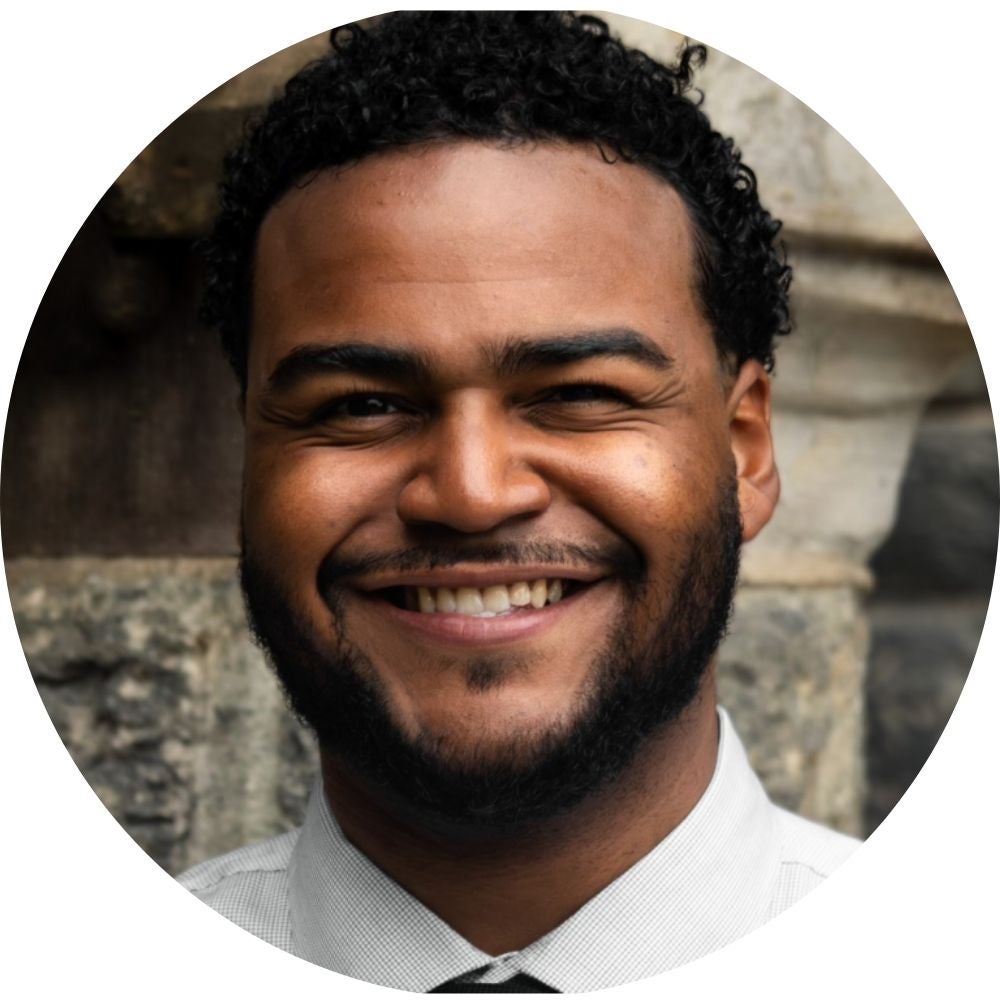
2025 Hoyas For Science Recipient
Special Master’s Program in Physiology & Biophysics
Because I genuinely love learning and striving to become better, I often place myself in situations that push me beyond my comfort zone.
About Major
Major is from Franklin Park, New Jersey. He earned his Bachelor of Science from Georgetown University before coming to Georgetown Biomedical Graduate Education.
How do you approach challenges in your life?
I approach challenges the same way I approach life, with an open mind and a commitment to persistence. I remind myself that setbacks are not failures, but part of the process of growth. Because I genuinely love learning and striving to become better, I often place myself in situations that push me beyond my comfort zone. While I may not always feel fully prepared, I see these moments as opportunities rather than obstacles. Each challenge represents a step forward, because choosing to learn, improve, and aim higher than who I was yesterday is already a form of success.
What experiences or goals led you to pursue graduate studies?
My ultimate goal is to become a physician. This task is not only daunting but represents a glass ceiling that has not been broken by any members of my family or friends. I am also a member of the Wampanoag Tribe of Aquinnah, and we have not had a single member of our tribe attend an accredited medical university in the entirety of our history. My pre-medical path has been mired by setback after setback; however, my family has been the source of my strength to continue on. These struggles manifested in a less-than-stellar academic record during my first two years at Georgetown, and despite an upward trend toward the end of my undergraduate studies, I was advised to complete the Special Master’s Program in Physiology to prove that I am capable of making my dreams a reality.
What is your academic focus? What sparked your interest in it?
My current academic focus revolves around the study of biophysics and physiology. It amuses me that every time I explain the nature of my program, I am met with a thousand-yard stare, as if I spoke a language foreign to this planet. I study how our bodies function and the mechanisms behind their uncanny ability to adapt and survive. The program itself comprises the academic requirements of the first year of medical school at Georgetown. I take the same exams as Georgetown medical students and am graded against their curve, despite the School of Medicine operating on a pass-fail basis. While my performance this year is heavily scrutinized, I firmly believe that the added pressure has helped me embark on a journey toward becoming the physician I know in my heart I will be.
What do you want to do after earning your degree?
I plan to take the next year to rest and recuperate. During that time, I will also be applying to medical school for the 2027 application cycle, a process that both scares and excites me. I hope that in the period of my life following the earning of my medical degree and licensure, I can alleviate at least some of the suffering that occurs in our world. Every day, our neighbors, family, friends, and even those with no relationship to us at all struggle with diseases and trauma that upend their lives and those around them. It would be the greatest honor to use all of my experience and knowledge to help those who are unable to help themselves.