
Julián Castillo Diaz
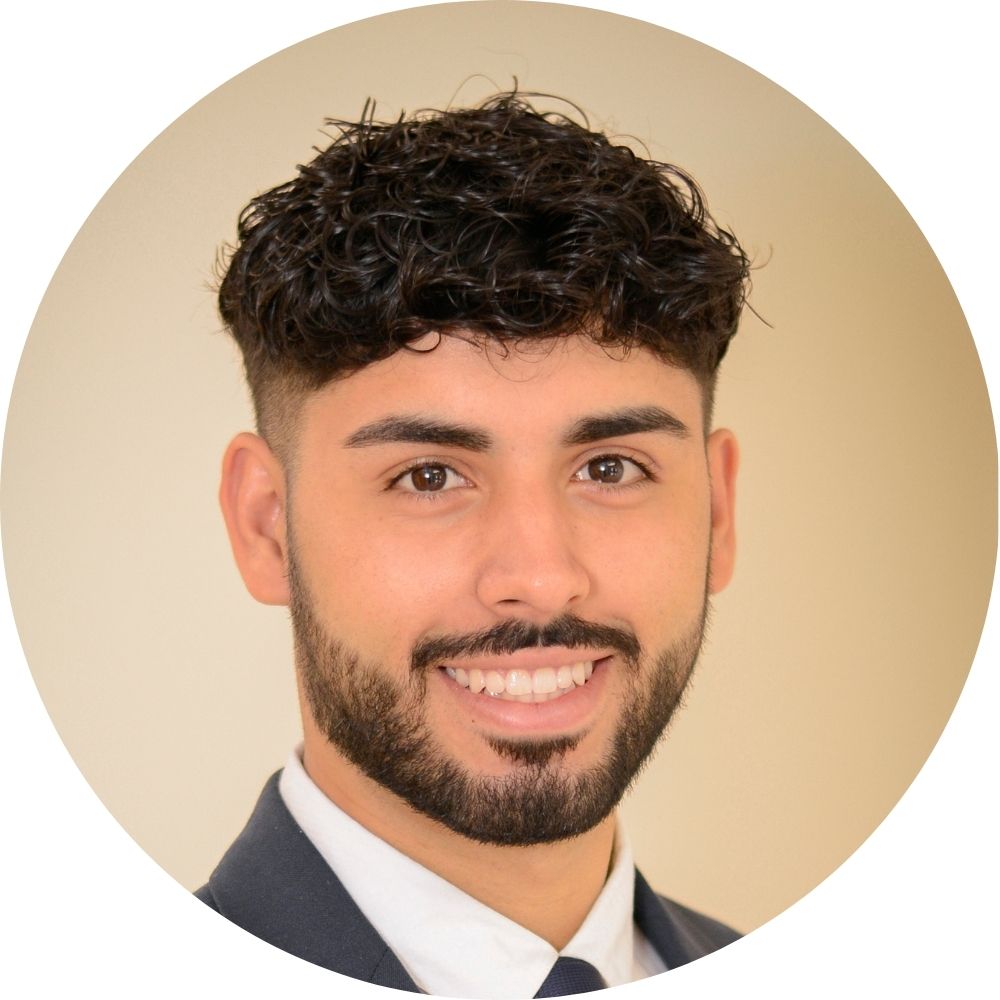
2025 Ignatian Hoya Recipient
M.S. in Integrative Medicine & Health Sciences
Whether through research, clinical practice, or education, I am energized by opportunities to help people reach their potential.
About Julián
Julián is from Winter Park, Florida. Before coming to Georgetown Biomedical Graduate Education, he earned a B.S. Applied Physiology and Kinesiology from the University of Florida.
What community service activity has meant the most to you?
The community service activity that has meant the most to me is volunteering as a soccer coach (“Buddy”) with TOPSoccer, a program designed for children with physical and intellectual disabilities. What began as a way to give back through a sport I love quickly became one of the most formative experiences in my life.
Working one on one with children who faced unique physical, sensory, or communication challenges reshaped how I approached communication, encouragement, and progress. Progress was not measured by goals scored or drills completed, but by moments of trust such as helping a child feel confident stepping onto the field, adapting activities so everyone could participate, and celebrating small victories that meant everything to them and their families. I learned how powerful encouragement and presence can be, especially for individuals who are often overlooked or underestimated.
This experience reshaped how I think about service and care. It showed me that meaningful impact does not require grand gestures. It requires meeting people where they are and valuing them for who they are. Volunteering with TOPSoccer strengthened my commitment to serving underserved communities and reinforced my desire to pursue a career centered on compassion, inclusion, and advocacy. Most importantly, it reminded me that service is not just about what you give, but about the perspective and humility you gain in return.
Why did you choose Georgetown for your graduate studies?
I chose Georgetown’s Integrative Medicine & Health Sciences program to learn more about whole-person care. My background in exercise physiology showed me that injury recovery wasn’t determined by exercise protocols alone. Nutrition, sleep, stress, and lifestyle proved equally necessary. Georgetown’s emphasis on systems thinking and evidence-based practice, rooted in cura personalis, offered the framework I needed to understand these interconnections and deliver more comprehensive patient care.
The program allows me to explore wellness, prevention, and rehabilitation within a rigorous curriculum while deepening my scientific foundation and integrating these principles into clinical practice.
What do you want to do after earning your degree?
After earning my degree, I plan to continue pursuing medical training with the goal of working in longevity, preventive, or sports medicine. I am especially interested in helping individuals recover from injury, improve movement, and build long-term resilience through rehabilitation, performance training, and nutrition.
I want to practice medicine that integrates performance science with a holistic approach to health and wellness, particularly serving diverse patient populations and Spanish-speaking communities where access to preventive and rehabilitative care remains limited. I am also committed to contributing to research and education so that evidence-based, integrative approaches become more widely incorporated into clinical practice.
What motivates you?
I am motivated by growth, impact, and service. I am driven by the desire to continually improve, both personally and professionally, so that I can better serve others. Whether through research, clinical practice, or education, I am energized by opportunities to help people reach their potential.
I am also motivated by the responsibility that comes with working in healthcare and the profound trust patients place in their providers. Knowing that my preparation, discipline, and empathy can directly influence someone’s well-being pushes me to stay focused and committed. Ultimately, I am motivated by the belief that health is foundational to opportunity, and that thoughtful care can change the trajectory of a person’s life.