
Brainhack DC Teams Design New Tools for Neuroscience Data
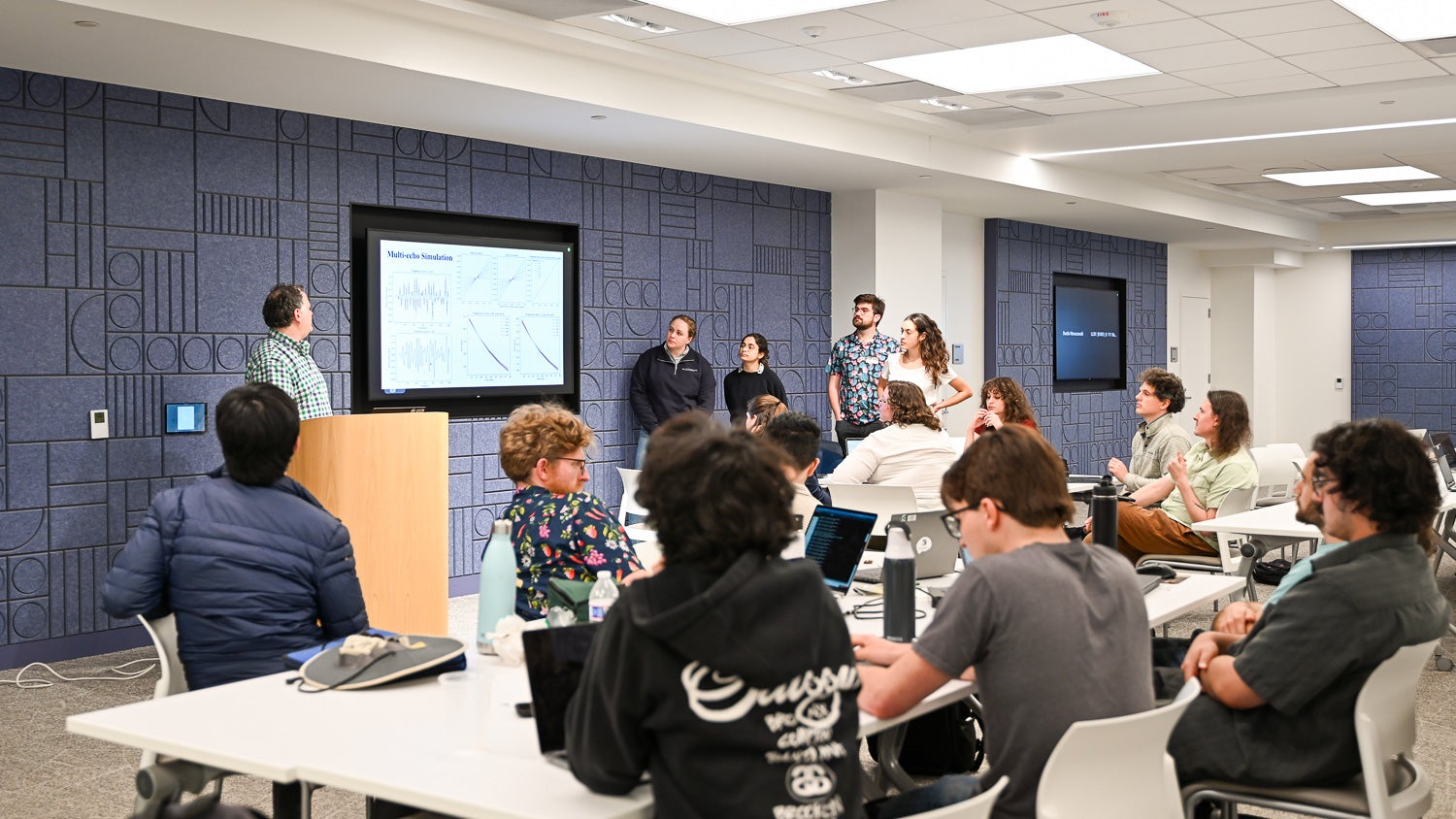
Georgetown neuroscientists teamed up with DC-area peers and National Institute of Mental Health (NIMH) researchers on April 16-17, 2026, to create new ways to collect, analyze and share data during the Brainhack DC 2026 hackathon.
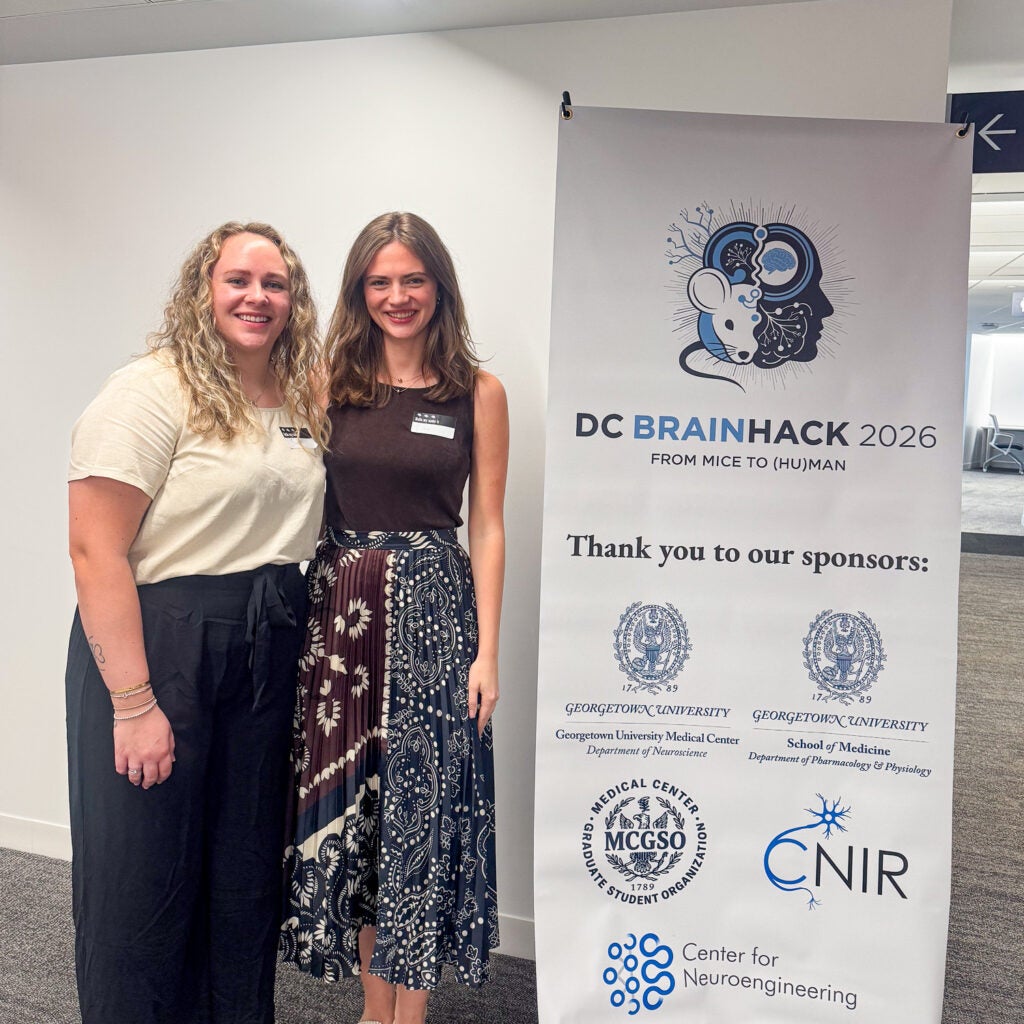
Peyton Subia and Chloe Casagrande. Photo courtesy of Chloe Casagrande
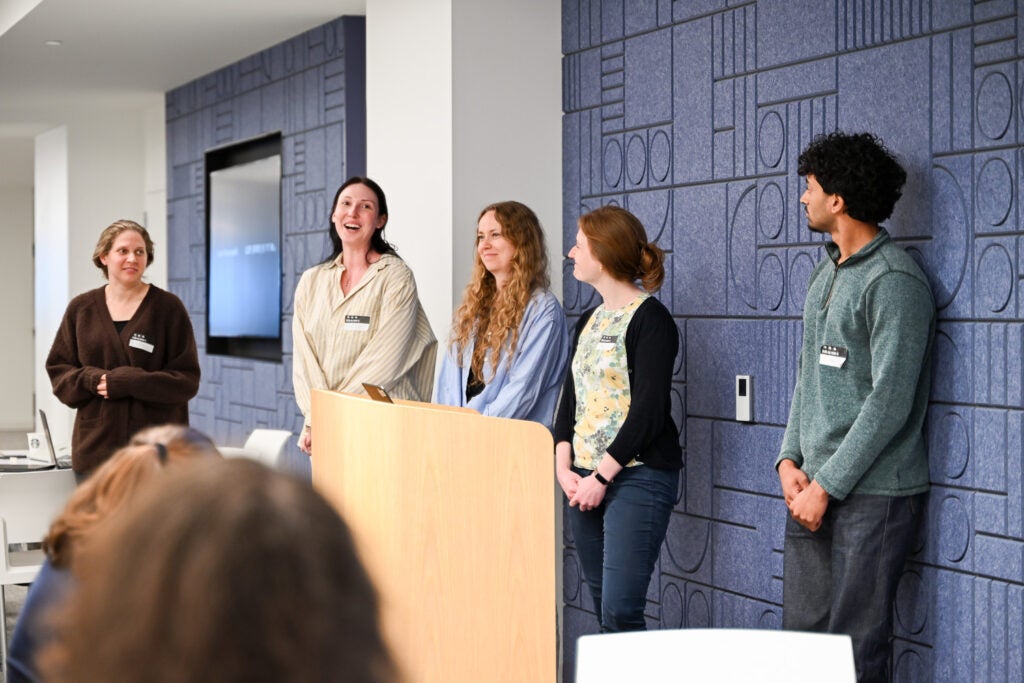
Chloe Casagrande (G’28, M’30) and Peyton Subia (G’27), doctoral students in the Interdisciplinary Program in Neuroscience (IPN), envisioned the two-day event as a forum for researchers to connect across institutions and experience levels. Attendees pitched project ideas at the beginning of the event, then split into project teams focused on building a data dashboard, simulating neural activity, and making an MRI database more accessible, among other topics tied to the theme of “From Mice to (Hu)man.”
This year was a reboot for Brainhack DC after a several-year hiatus. Casagrande “sent out a message into the internet void” to gauge interest and heard back from NIMH data scientist Dustin Moraczewski, who helped to organize the hackathon’s last iteration in 2022.
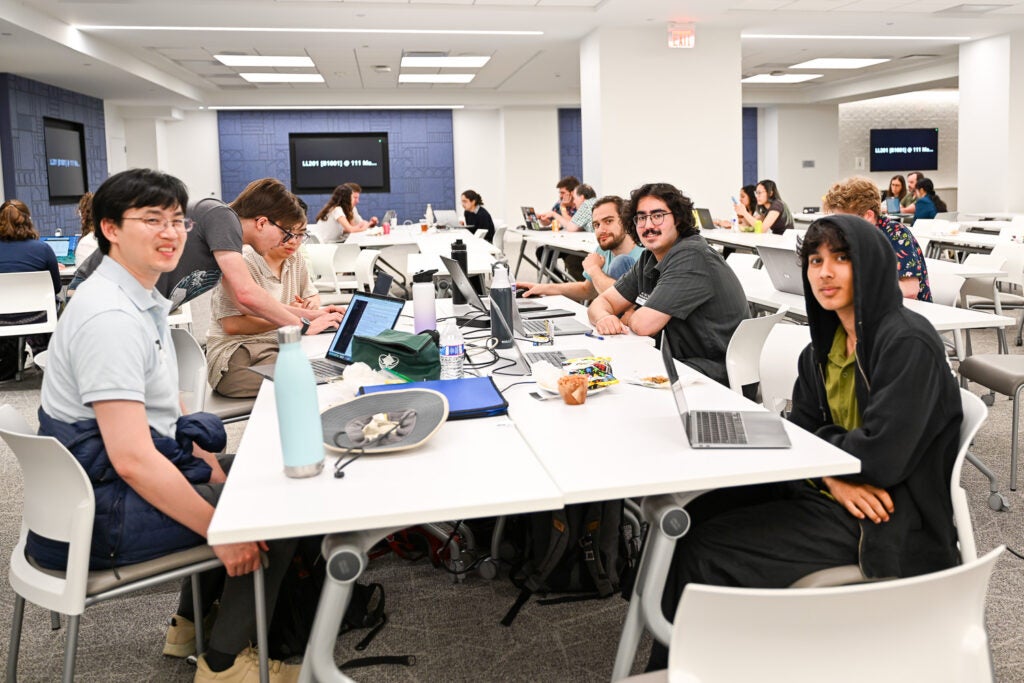
More NIMH scientists as well as students from the University of Maryland and a researcher at Children’s National Hospital got involved to shape the event, drawing about 70 attendees to Georgetown’s Capitol Campus. Hugo Tejeda and Tyler Morgan, both NIMH researchers, gave talks on their respective work – Tejeda on animal research with fiber photometry, Morgan on the emerging field of layer fMRI. And a career panel spoke about paths in academia, industry and government.
As organizers, Casagrande and Subia drew on their experience as leaders of the Georgetown Methods Lab, which seeks to “build an inclusive community of neuroimagers” and learn new neuroscientific research methods. They aimed to make this year’s Brainhack DC accessible across skill levels and disciplines.
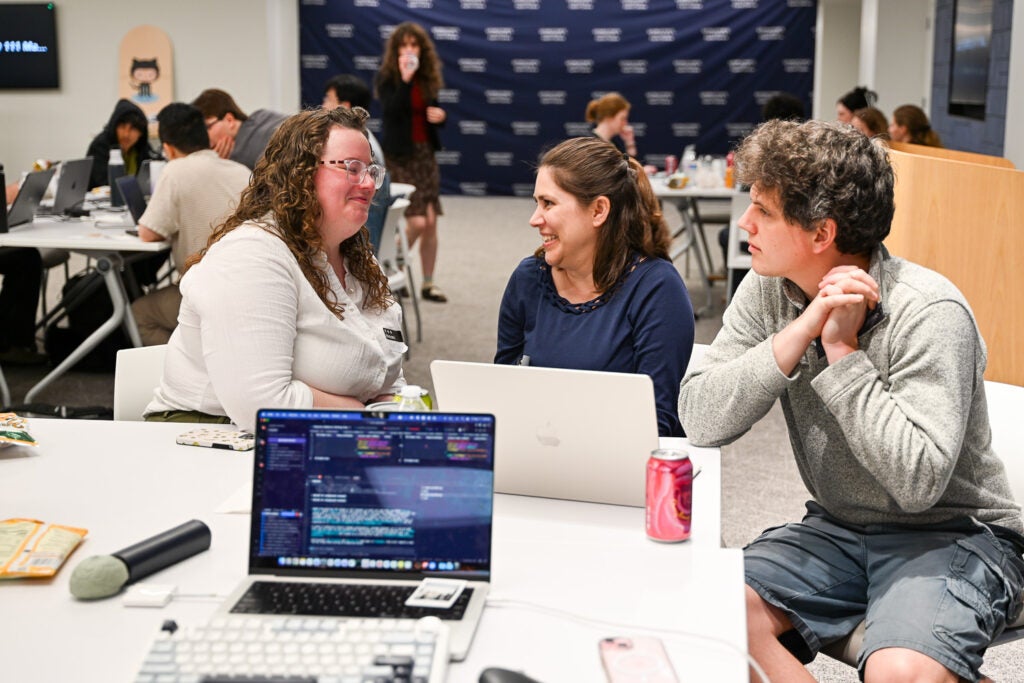
“A big goal of this year was to make it a wider scope of researchers,” said Subia. “In the past, it’s mostly just been human researchers, so people more on the cognitive neuroimaging side. … This year, we really tried to make it more inclusive for people who do animal work as well, on more of the cellular and molecular side.”
“We wanted to be in alignment with the goals of BrainHack Global, which is trying to train scientists across levels on how to use large datasets, open datasets, open-source software – being comfortable and familiar with how to create and disseminate code,” Casagrande said. “The whole point is to build and foster a collaborative environment for scientists that tries to increase transparency and reproducibility, [and] comfort with being able to … look at data that’s not from your own lab.”
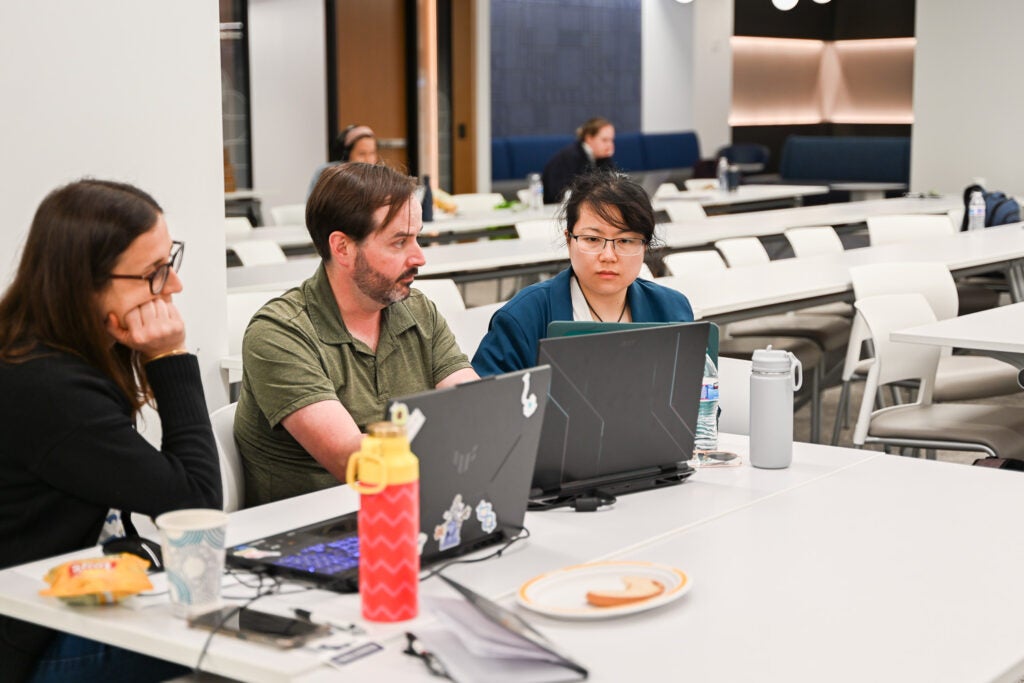
Many of the Brainhack DC participants experimented with AI tools, using them to write code and testing their effectiveness at various tasks. Participants also got to work with the developer platform GitHub, used to save and collaborate on code.
“It was a good opportunity for people who have been in wet lab for such a long time to have a transition into technical [topics],” said Pranjal Dhat (G’25), an alumna of the M.S. in Bioinformatics program and bioinformatician for the Joshi Lab in Georgetown University Medical Center (GUMC). “There were some teams that were teaching … basic stuff like how to make a GitHub repository, which I as a bioinformatician do know, but wet lab people, they don’t know much [about], or a few people might have done it during their undergrad or grad school, but they have forgotten about it. So it was kind of cool to have such teams that were teaching us and helping you navigate through the entire hackathon.”
Brainhack DC 2026 was sponsored by the Georgetown University Medical Center Graduate Student Organization (MCGSO), the departments of Neuroscience and Pharmacology & Physiology, the Center for Neuroengineering, and the Center for Neural Injury and Recovery.
BGE Student Events
More BGE News
News
Heart of the Harvey Performers Explore ‘the Art of Medicine and the Medicine of Art’
Students and faculty from across Georgetown University explored the human dimension of health and healthcare through theater, poetry, prose, music and dance.
April 25, 2026
News
Research ‘Breaks Out’: Operation Outbreak Simulation Opens New Paths for Georgetown Students
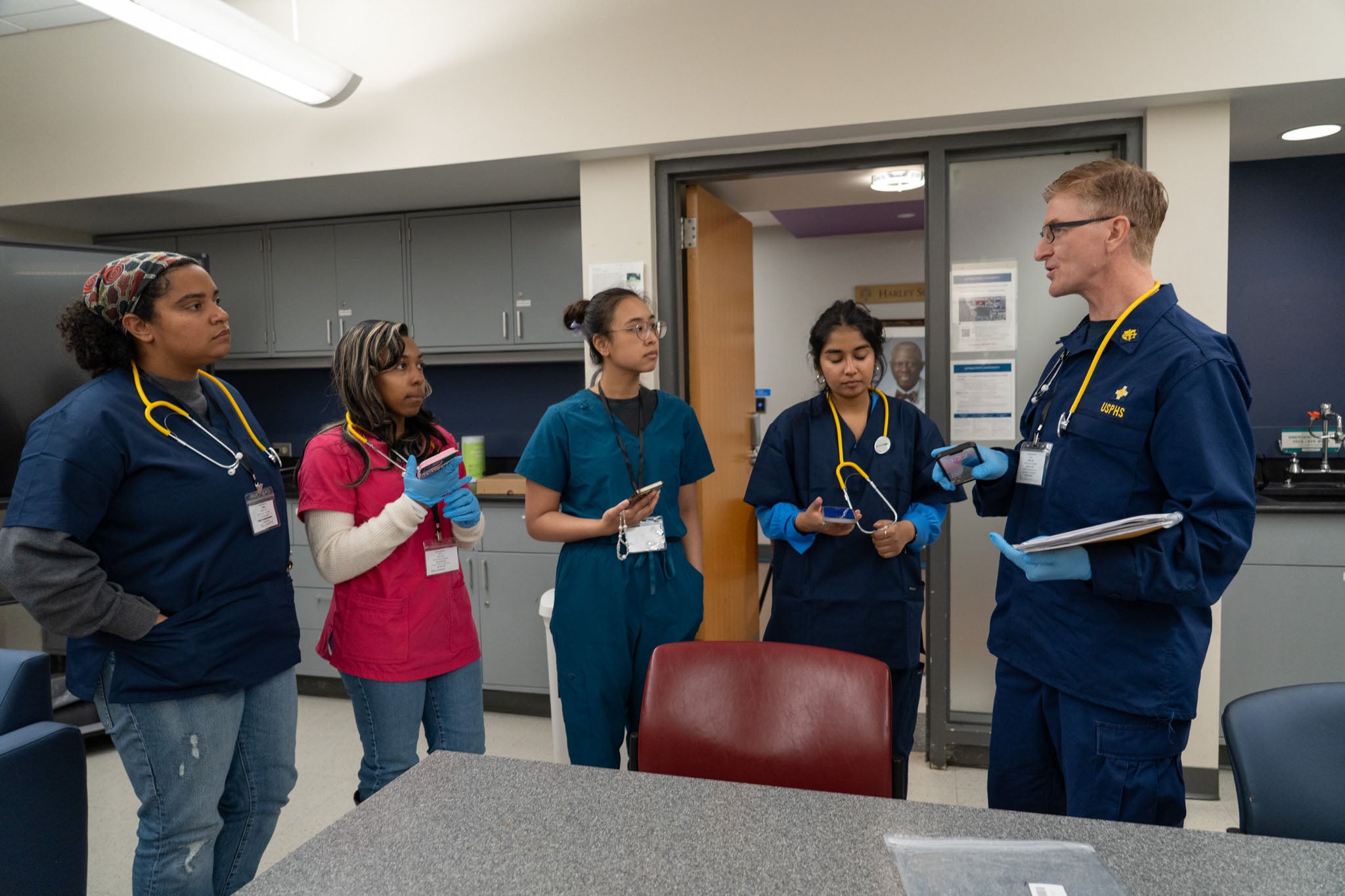
Students and faculty from across Georgetown University faced down a virtual epidemic, heard from biosecurity experts, and presented their own research during the student-led Operation Outbreak event. The disease outbreak simulation allows researchers to study society’s response to a public health emergency.
April 10, 2026