
Q&A: Neuroscience Student Michael C. Marone Learns and Teaches through Science Writing and App Development
By Benjamin Nochimson
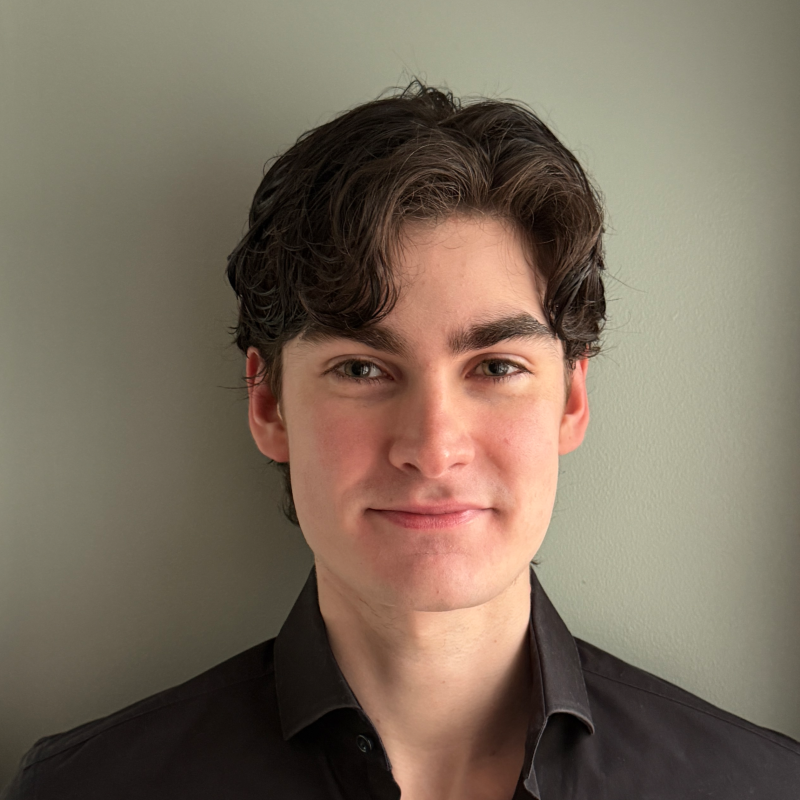
Michael Christopher Marone brings an impressive array of interests and ambitions to his studies at Georgetown University. In addition to his academic work in the M.S. in Integrative Neuroscience, Michael is an accomplished science writer and software developer. He recently published an op-ed in Undark magazine on transcranial magnetic stimulation (TMS), a depression treatment, and he’s working on a book about the neuroscience of caffeine and nicotine. In addition, Michael created the Neuro Sandbox: Simulator app, which models neural circuit behavior.
Michael spoke with BGE about his journey in science, his research interests, and his career goals after he graduates from Georgetown.
BGE: What is your background in biomedicine?
Michael C. Marone: I did my undergraduate degree in integrative neuroscience at Fordham and loved it, but I felt I didn’t yet have the depth I needed to do meaningful neuroscience research. I wanted more than just a foundation before entering the field.
When I started looking at programs, I considered both Ph.D. and master’s options and decided a master’s would get me into the workforce sooner, with the option to pursue a Ph.D. later. I had a list of about 30 schools, and Georgetown initially just happened to be on it. But as I dug into the program, everything about it seemed positive: the faculty’s research areas were genuinely interesting to me, the curriculum was broad and rigorous, and, like Fordham, it’s a Jesuit institution, which I had really appreciated as part of my undergraduate experience.
I ended up liking Georgetown so much that it was the only school I applied to. My thinking was: It’s either here, or I work and try again next cycle until I get in.
BGE: Why did you choose Georgetown for your M.S. in Integrative Neuroscience?
MCM: The flexibility. Georgetown offers a research track, a policy track, and a “no track” option. I chose the no-track option so I could effectively build my own concentration from a wide range of electives.
At Fordham, I was in the cognitive neuroscience concentration, which was one of a few fixed options. Here, I’ve been able to take classes like research ethics and molecular mechanisms of neurodegeneration, courses I might not have had access to in a more rigid track structure. That kind of integrative, customizable approach feels true to what integrative neuroscience should be.
It mattered a lot that the faculty here are deep specialists in diverse subfields. For example, Dr. Main does extensive work on traumatic brain injury (TBI). I don’t necessarily want to do TBI research myself, but understanding TBI is very relevant to other areas of neuroscience and pharmacology.
That’s the integrative part of integrative neuroscience: You pull from many specialties to build a broad, solid foundation, and then from that you can grow your own branch. Knowing I could learn directly from people who are true experts in their niches was a big draw.
BGE: How are your master’s studies going for you?
MCM: I’m a big fan of the program. The integrative structure, the flexibility with electives, and the diversity of faculty research have all been really important for me.
In particular, Dr. Main has been extremely helpful and supportive. More broadly, the Jesuit ethos, this blend of intellectual rigor, reflection, and a commitment to giving back, has been something I’ve appreciated both at Fordham and now at Georgetown. Even for people who don’t share the faith, there’s a lot of wisdom in that way of approaching education and life.
BGE: You previously worked on visual neuroscience and computer vision at Fordham. What was that project about?
MCM: I worked in a vision and memory lab where we studied scene typicality. The question was: when you see a picture of a beach, how “beachy” does it feel? It’s a slightly funny idea, but we all intuitively know that some images are more typical examples of a category than others.
We used computer vision models to rate how typical different scenes were, and then asked human participants to do the same. We compared the two, looking at whether alignment came from gist processing, object processing (e.g., stoves and fridges making a scene “kitchen-like”), and other factors.
The broader goal was to use human visual performance, where we still outperform machines, to improve computer vision systems. It’s a sort of back-and-forth: Learn from humans to improve the models, then use those models to better understand human perception.
I found it fascinating, but I realized that long-term my passion lies more in neuropharmacology than in vision research.
BGE: What kind of contributions do you hope to make in neuroscience?
MCM: I’m especially interested in neuropharmacological research: drug development for neurological and neurodegenerative diseases. That includes classical dementias, like Alzheimer’s, but also conditions such as multiple sclerosis (MS) and amyotrophic lateral sclerosis (ALS) that involve neurodegeneration but aren’t always thought of in the same category.
An undergraduate degree in a STEM field is often just a starting point. If I had gone straight into industry with only my bachelor’s, I probably would have spent a lot of time trying to teach myself critical concepts on the side, while colleagues higher up had to fill in gaps for me. I’d rather arrive already equipped with the knowledge to contribute, not just catch up.
We’re also at a really interesting moment where AI is transforming how we do biomedical research, and I’d like to be part of that intersection, using AI to accelerate drug discovery and better understand how these compounds interact with the nervous system.
Academics, Science Writing and App Development
BGE: What are you focused on academically right now?
MCM: My main research interest is neuropharmacology, especially as it relates to neurodegenerative diseases. I’m currently taking Molecular Mechanisms of Neurodegeneration, which isn’t strictly a pharmacology course but naturally overlaps with pharmacology because drug interventions are central to treating these conditions. That overlap has really solidified my interest in this direction.
I’m also in the process of applying for a part-time pharmacokinetics graduate certificate at Temple University. It’s a four-course program where I’d complete one course at a time while working. The idea is to further refine my expertise in how drugs move through and act within the body, particularly in the nervous system.
BGE: You’re also a writer. What kind of science communication work do you do?
MCM: I consider myself a freelance science writer. I’m not on staff anywhere; instead, I pitch pieces to outlets that fit a particular topic.
For example, I wrote an op-ed for Undark on transcranial magnetic stimulation and science policy. That was a one-off, contracted piece. They were great to work with: strong editing, rigorous fact-checking, clear deadlines.
Most of my writing, though, lives on Medium, where individual-run publications curate submissions. One I write for frequently is Microbial Instincts, a biology-focused publication. Medium gives me the freedom to write what I find important or interesting, without the long lead times that come with traditional pitching.
Long-term, I’d like to do more with conventional outlets as I build up my portfolio. I’m also working on a book and actively seeking agent representation.
BGE: What is your book about?
MCM: The book is about the neuroscience of caffeine and nicotine. It’s not just about addiction, though that’s certainly part of it. It’s about how these substances work in the brain: the receptors they act on, why people become dependent or addicted, the benefits and harms, and how pervasive their use is in everyday life.
Roughly half of Americans consume at least one of these stimulants weekly. They’re not the most dangerous substances out there, but they are powerful, and they’re everywhere. There’s solid scientific information available, but it’s scattered and often locked in textbooks or primary literature.
My goal is to “de-textbookify” the science: bring the rigor, but in a form that someone who doesn’t want to read a 500-page textbook can still fully understand. I’ve pitched book proposals before, and the main feedback from agents hasn’t been about the writing itself, it’s that I need a larger existing audience. So part of what I’m doing now with articles and essays is building that platform.
BGE: Why is science writing important to you?
MCM: I’ve always enjoyed the act of writing itself. I used to write a lot of fiction, and when I was trying to improve, I kept coming across the advice: “Write what you know.” At some point I realized: I’m spending years studying neuroscience, this is what I know.
At the same time, there’s a lot of misinformation out there, especially about health, neuroscience, and psychopharmacology. I’m under no illusion that I can fix that on my own, but if I can chip away at it, even a little, that feels like a meaningful way to use my training.
When I was at Fordham, President Father McShane often said, “To whom much is given, much is expected.” I’ve always taken that to mean that if you’re given an education, you have a responsibility to give something back. Writing is one of the ways I try to do that.
Also, I’ll be honest: if I didn’t enjoy it, I wouldn’t do it. It’s a mix of personal enjoyment and a belief that it genuinely helps.
BGE: You’ve also developed a neuroscience app, Neuro Sandbox: Simulator. What does it do?
MCM: The app is a neural network simulator built as a teaching tool. When I was first learning some foundational neuroscience concepts, especially things like Hebbian learning, I found that even with good lectures, drawing circuits in my notebook just wasn’t enough. I’m very visual, and I needed to see the dynamics play out.
So I built a simple simulation for myself. Later I noticed that while there were other neural network simulations available, none ran locally on iOS in the way I wanted. Since I already had the core code, I decided to turn it into a polished app that others could use.
The idea is that students can build and visualize simple neural circuits. For example, a professor might say, “Try to build a network that simulates seizure activity.” Students can then play in a sandbox: Remove inhibitory neurons, add feedback loops, tweak parameters, and see what happens. It turns an abstract concept into something visual and interactive.
The app is free, and I don’t make any money from it. A professor I had last semester is interested in using it as a classroom aid, which is exactly what I was hoping for. I’m continuing to update it—adding a tutorial (which is now live), improving the user interface, fixing bugs, and exploring more features.
Planning a Successful Career in an Evolving Field
BGE: Does your app connect to AI and machine learning?
MCM: Conceptually, yes. Practically, only to a point. Modern AI systems use neural networks that are far larger and more complex than anything you can run locally on a phone. But the basic ideas are shared: excitatory and inhibitory units, network structure, and propagation of activity.
In that sense, the app can serve as a stepping stone: students can use a biologically-flavored neural network to get comfortable with the core principles before moving on to more abstract, large-scale AI models that require serious computational power.
In undergrad, I took a data mining course that fed into a computational neuroscience course. We ran big neural network simulations on powerful machines, which was effective but not accessible or portable. This app is my attempt to bring some of those foundational concepts down to a level where they’re visually intuitive and run on a device you already have in your pocket.
BGE: As a neuroscientist-in-training, how do you see AI systems compared to the human brain?
MCM: AI neural networks are inspired by biological neural networks, but they are not the same thing.
At a very basic level—nodes summing inputs and “deciding” whether to activate—there are striking similarities. If you’re just starting out, you might think, “These look identical.” But as you go deeper, more differences emerge: in scale, architecture, learning rules, biological constraints, and so on.
Right now, I’d say there are more differences than similarities, but the overlap at the conceptual level is still meaningful. You can see that in the hiring patterns of companies like OpenAI and DeepMind; they actively recruit neuroscientists, which tells me they see real value in bringing biological insight into model development.
BGE: How are you thinking about AI in the field of neuroscience?
MCM: Many of the things I want to do in drug discovery will rely heavily on AI, especially for simulating drug-target interactions and exploring huge chemical spaces in silico. If spending a few years in an AI-heavy environment would make those tools better and more usable in neuropharmacology, I’d be very open to it. Long-term, though, I see myself more in biologically focused AI applications, like the team that built AlphaFold Protein Structure Database. AI systems designed specifically for biological and medical problems rather than in broad, general-purpose large language models.
A lot of drug discovery boils down to exploring enormous numbers of possible molecules and how they might interact with biological systems. Humans can reason about that, but not at the scale we’d like. AI models, particularly deep learning systems, can simulate or approximate how different molecular structures might bind to targets in the nervous system and what downstream effects might look like. Instead of giving a drug to a person and then waiting to see what happens, you can simulate how it binds to a receptor on a neuron, predict its pharmacodynamic effects, and narrow down the most promising candidates before you move into animal or human studies.
We’re not fully there yet, but the trend is clear. By the time I’m deeper into my career, I expect these tools to be central to how we develop new neuropharmacological treatments.
BGE: What do you see for yourself after graduating from Georgetown?
MCM: Ideally, I’d like to work in industry in a neuropharmacology-focused role, while continuing to write and communicate science on the side.
A rough sketch of the plan looks like this: work in pharmacology/neuropharmacology research, ideally with a strong translational or drug development component; complete the pharmacokinetics certificate at Temple University, taking one course per semester while working; continue writing science articles (I aim for around one piece every six weeks); and publish books periodically, if I’m able to secure agent representation.
I don’t expect to make my entire living as a science writer, but I do want writing to be a consistent part of my professional life.
Neuroscience Student Accomplishments
More Integrative Neuroscience News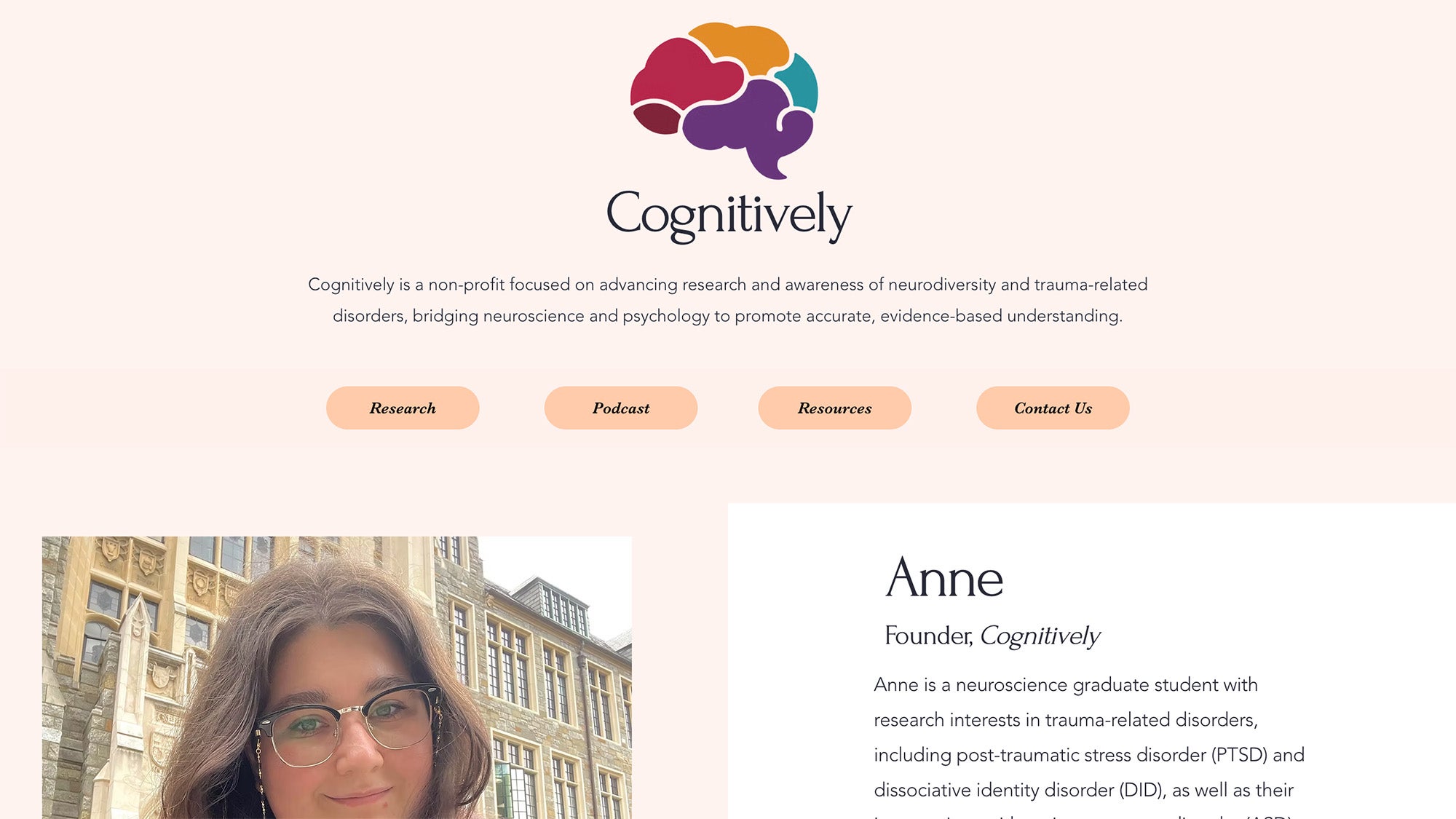
News
Integrative Neuroscience Student Launches Website to Share Mental Health Knowledge
Anne Schauer hopes her new website, Cognitively.org, will “bridge a gap of understanding between psychology and neuroscience for people with the disorders themselves, but also with the professionals.”
March 5, 2025
News, Student Profiles
Presidential Management Fellow Finalist Aims to Take Neuroscience Knowledge Into Public Service
Eleni Daughters credits her interests in neuroscience and national security as motivators in applying to the prestigious national fellowship program.
March 20, 2024