
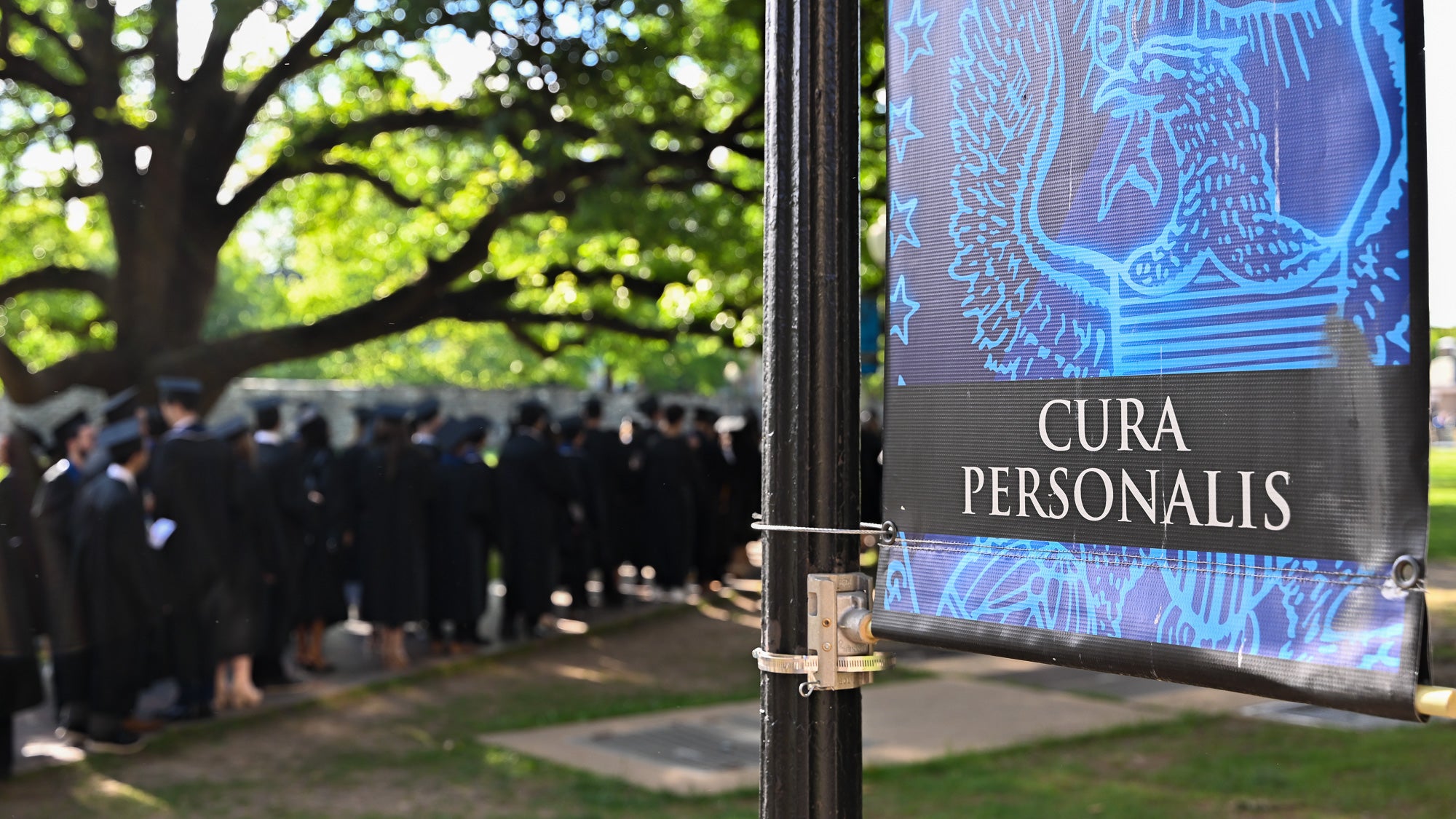
Changing Science, Changing Their Lives: Discovery and Transformation in the BGE Class of 2026
By Benjamin Nochimson and Natalie Rabner
At Biomedical Graduate Education (BGE) at Georgetown University School of Medicine, our students are dedicated to the work of discovery. In the classroom, the lab and the clinic, they immerse themselves in the study of biology and health while also advancing the cutting edge of science and technology. This kind of education changes the learner and empowers the learner to change the world for the better.
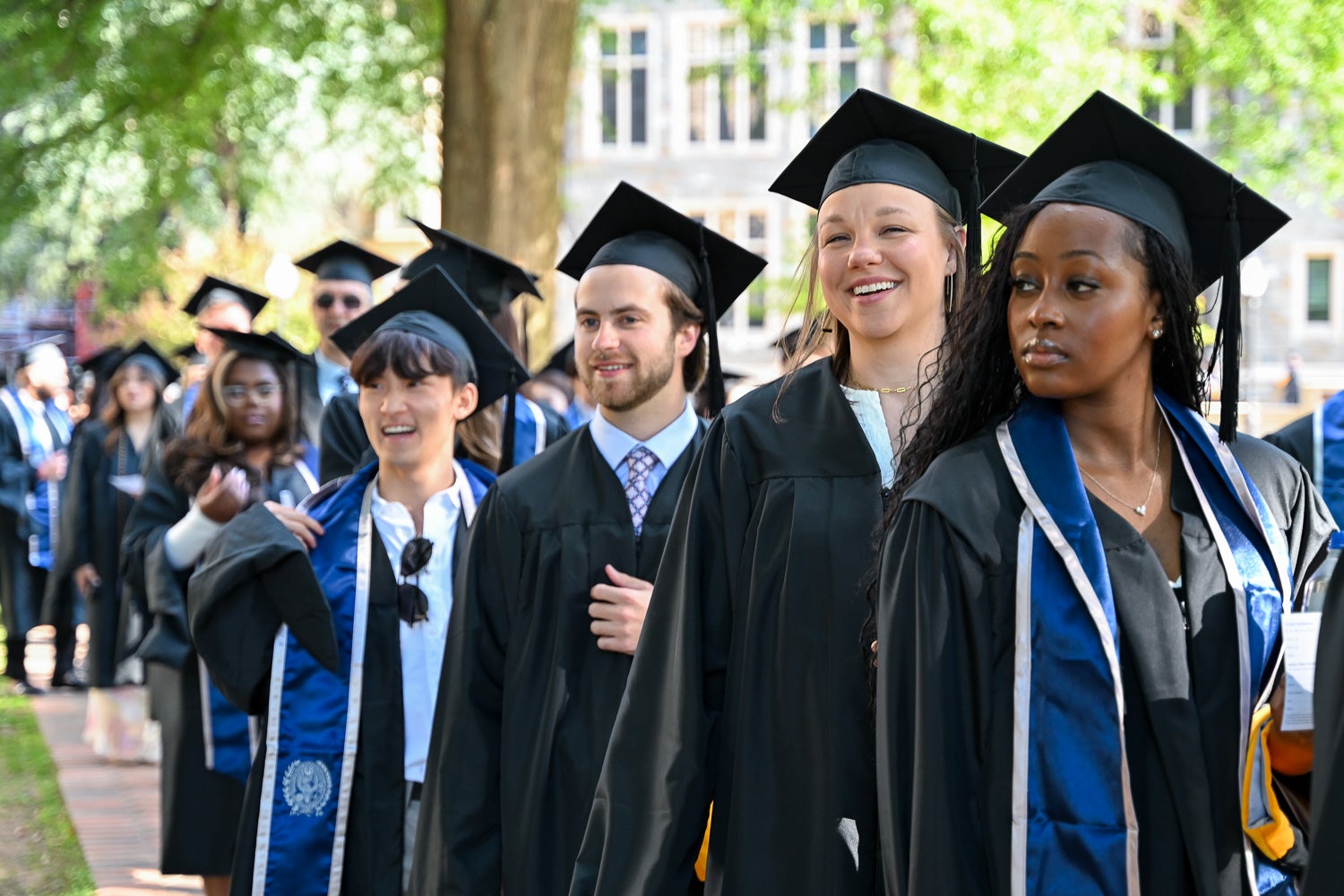
Each of the 481 graduates in the BGE Class of 2026 – 396 Master of Science graduates, 25 Ph.D.s, and 60 certificate students – has been transformed in some way by their time in our academic community. Watching our students come together from so many places, fields and backgrounds is as exciting as watching them walk across the Commencement stage and out into the world with new knowledge, interests and aspirations.
We spoke with several of our newest graduates to find out what they’ve learned about science and themselves during their programs. From refining their academic interests, to building confidence and competence for the next step in their career, to finding new ways to serve their community, each of these Hoyas shows us the power of discovery and transformation through education.
As you read our graduates’ stories, we hope their journeys of discovery and transformation will inspire you in your own.
Darren Chan
M.S. in Biochemistry & Molecular Biology

Born and raised in Hong Kong, Darren Chan moved to California in high school and attended the University of California, Davis, where she majored in Biological Sciences. After undergrad, Darren worked in biotech and academia for three years before deciding to go back to school at Georgetown for her M.S. in Biochemistry & Molecular Biology. Darren is thankful for the mix of professional and academic opportunities that Georgetown offers.
“In the second semester, we had the internship opportunity, which was very important to me because I want to continue building my experience as well as being attractive to the job market as compared to other schools who had a two-year pure academic program,” Darren says. “I interned at [Lombardi Comprehensive Cancer Center]. … The specific lab I was interning in worked with zebrafish, so that experience was especially meaningful, as opportunities to work with that animal model are not very common … It gave me an opportunity to combine animal research with cancer research.”
Darren believes that her program has helped crystalize her career path and interests. “When I came here, I realized this is going to be my career,” she says. “My career is going to be research, and it’s kind of crazy to think how far I’ve come throughout my academic journey as well as my career journey. And I’m really, really happy about that. It’s what I want to do. I achieved what I want to do,” says Darren.
“From the beginning, after undergrad, I didn’t know if I wanted to go to my master’s program. I didn’t really know what I wanted to do. So I went into academia and went into industry, working at different labs, different companies. And after a while I was like, OK, I want to advance in my career and go back for a master’s so I can be at a higher level at the companies that I work at.
“After being here, it’s like, ‘Oh, I will achieve these things that I want to do in life.’ I will be a scientist. And I think it’s really a big accomplishment.”
Major Elliott
Special Master’s Program in Physiology & Biophysics
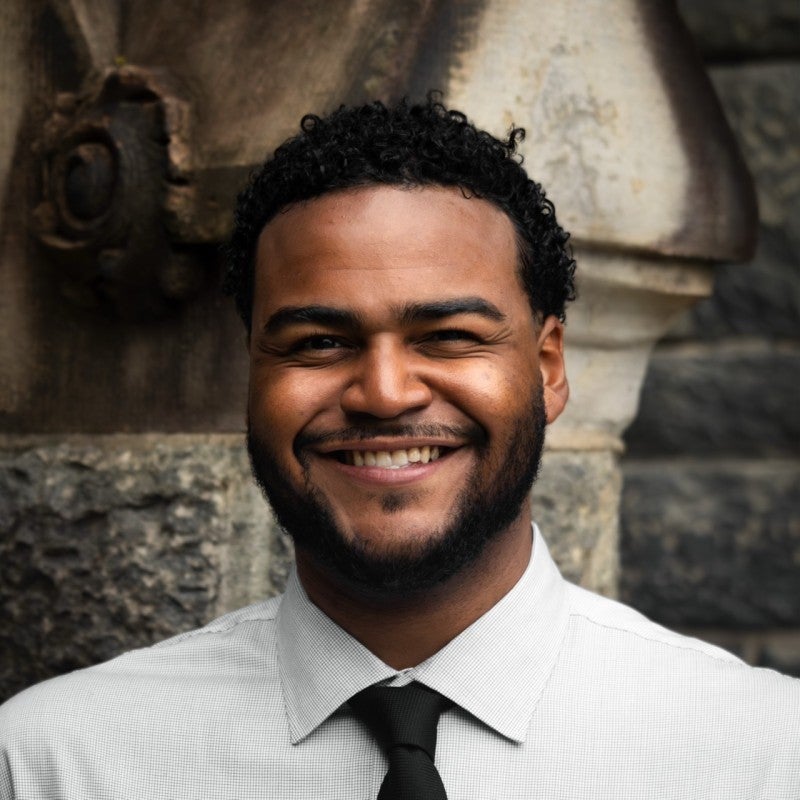
Major Elliott is a double Hoya, having studied molecular biology for his bachelor’s from Georgetown before coming back for his master’s. And he hopes to return to the Hilltop again for medical school.
“Junior year, I had a meeting with my dean, and we were talking about med school … and [she suggested] doing some type of master’s program geared towards medicine, geared toward showing med schools that you can hang at that level,” Major says. She encouraged him to apply to Georgetown’s Special Master’s Program (SMP) in Physiology & Biophysics. And “the rest was history.”
“When Georgetown came calling, I was like, ‘It is meant to be again,’” Major says. “And then, hopefully, I want to be a triple Hoya.”
Major just got a job as a medical assistant to the former chief of interventional radiology at MedStar Georgetown University Hospital, and he is excited to start that role while preparing to apply to medical school. Reflecting on his experience in the master’s program, Major is struck by the confidence he has gained.
“I realized I can do this. That’s my whole takeaway from this year,” says Major. “I think I just hit my stride, which is crazy to me how different a year can make you in such a short amount of time.”
Clare Jayawickrama
M.S. in Systems Medicine
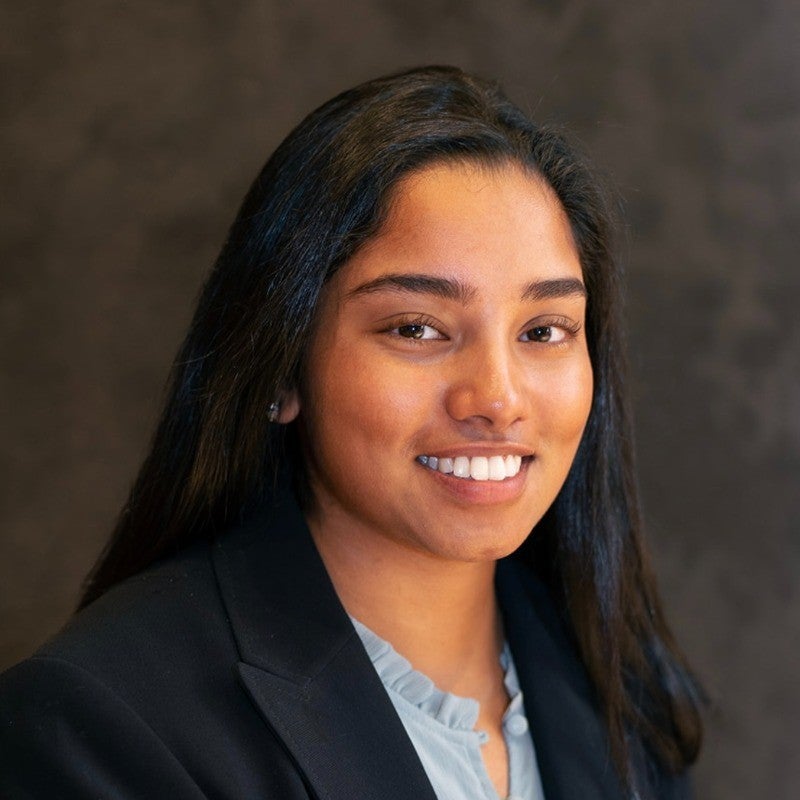
Clare Jayawickrama came to Georgetown from Corvallis, Oregon, after majoring in Bioengineering at Oregon State University. Ever since she was 16 years old, her goal has been to apply to medical school and become a physician, so everything from her undergraduate degree to her master’s in Systems Medicine has been with that aim in mind. Clare is happy that her program at Georgetown has given her the chance to learn a new way of thinking that comprises a holistic medical education.
“Even though I was pretty sure I wanted to go to medical school, I chose a degree that was more applied so that it gives me more options, more tools,” Clare says. “There’s a lot of opportunities that can come from being at a place like Georgetown, so I was very excited when I found the program because it aligned well with what I needed. … During the time that I am applying to medical school, I would like to be able to utilize that foundation [in engineering] in a way that could strengthen me as a doctor and could help me serve patients better and see medicine from a different perspective.”
Clare is optimistic about what the future holds for her: “Through the Systems Medicine program, I discovered that the horizons are just broader than I expected them to be in medicine. This has made me more excited about what I could do in the future and given me many different things that I could consider being involved with, particularly in research and in clinical care.”
Alba Revilla Ruiz
M.S. in Biohazardous Threat Agents & Emerging Infectious Diseases

Hailing from Madrid, Spain, Alba Revilla Ruiz is a veterinary doctor by training, and she became interested in fighting bioterrorism through her studies of animal diseases. When she couldn’t find a suitable biodefense program in Europe, she looked elsewhere. “I knew about the reputation of Georgetown,” Alba says. “It has a very strong international presence. I wanted to get into the workforce as soon as possible, and I chose Georgetown mostly because of its prestige but also the duration of the program.”
As a Georgetown student in the M.S. in Biohazardous Threat Agents & Emerging Infectious Diseases program, Alba has been able to attend and speak at conferences to expand her perspective.
“I’ve tried to get into as many things as possible to make the most out of my experience,” Alba says. “There were many conferences throughout the year. I gave a talk at the AI conference, the Nuclear Summit, the Food as Medicine conference, and the coolest one: the Schull Institute International Conference at the NASA Johnson Space Center in Houston.”
“Going to Georgetown really made me realize that this topic of biodefense is very prevalent nowadays, and it’s going to become even more important in the future,” she says. “Veterinarians are needed because they have a unique perspective on these diseases that is essential to prevent them and carry out the appropriate response. It made me realize how valuable my background could be. This master’s not only made me further develop my scientific skills and knowledge, but also get the defense and counterterrorism insights and training that are necessary.”
Alba also appreciates the opportunity to learn new perspectives, with both faculty and fellow students coming from many different backgrounds.
“All the class discussions are very interesting, because everyone has a very diverse background and point of view,” Alba says. “But all these different ideas end up converging into solutions with the same shared goal. So I’m really happy about having gone to Georgetown.”
Micaila Curtis
Ph.D. in Biochemistry and Molecular & Cellular Biology
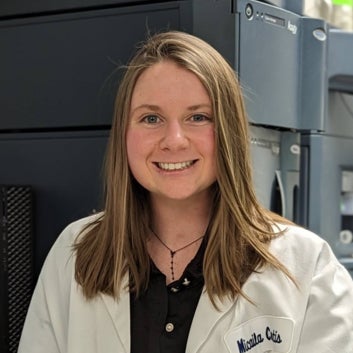
Micaila Curtis started making an impact in healthcare long before coming to Georgetown. The central Kansas native worked as a certified nursing assistant for five years, then joined an immunology lab in 2020 and worked 60-hour weeks as part of the desperate fight to contain the COVID-19 pandemic.
For Micaila, a Ph.D. was an opportunity to “find what I’m truly passionate about that I could spend the rest of my life doing.” She had planned to pursue a medical degree, but realized that she wanted to stay in the lab, where she felt she could make a difference sooner.
Micaila changed her research focus during her studies in the Ph.D. in Biochemistry and Molecular & Cellular Biology program, shifting from a metabolomics lab to Associate Professor Stella Alimperti’s Tissue Engineering and Regenerative Medicine Lab, working to develop better non-animal models for research. It was a difficult decision, but one that helped Micaila to grow professionally by following what she was truly passionate about. She worked alongside mechanical and chemical engineers and attended conferences and meetings where she shared her work and met fellow researchers.
She also found a calling in student government. Micaila served in the Medical Center Graduate Student Organization (MCGSO), Georgetown Women in Science and Education (WISE), and in the Graduate Student Government (GradGov) as a senator, vice president and finally president. She planned meetings, represented student interests in conversations with Georgetown leadership, and supported fellow GradGov members students to follow their passions and build their legacies at the university.
After completing her Ph.D., Micaila has continued to expand her impact. She’s working as a postdoctoral research fellow at the University of Maryland, Baltimore, and she hopes to use the skills she practiced in her Georgetown lab to “look at ways that we can contribute back to better healthcare practices in clinical medicine.” She is also continuing her advocacy for students by serving as the youngest trustee of her undergraduate alma mater, McPherson College.
“I have gotten so much from all these opportunities I’ve applied for, so now this new part of my life is to give back, to help teach, to help mentor, to train,” Micaila says. “To work on research that is going to directly help people, and hopefully support more accessibility for rural and low-resource communities” like the one she comes from.
“All I want to do is pay it forward,” Micaila says. “I am so blessed and thankful for these opportunities, so … I’m always trying to advocate for others to look for those opportunities.”
Congratulations to all of our graduates!
We invite you to visit our Alumni page to find out how you can take advantage of BGE resources and stay connected with the BGE community after graduation.
BGE’s Class of 2026
More BGE News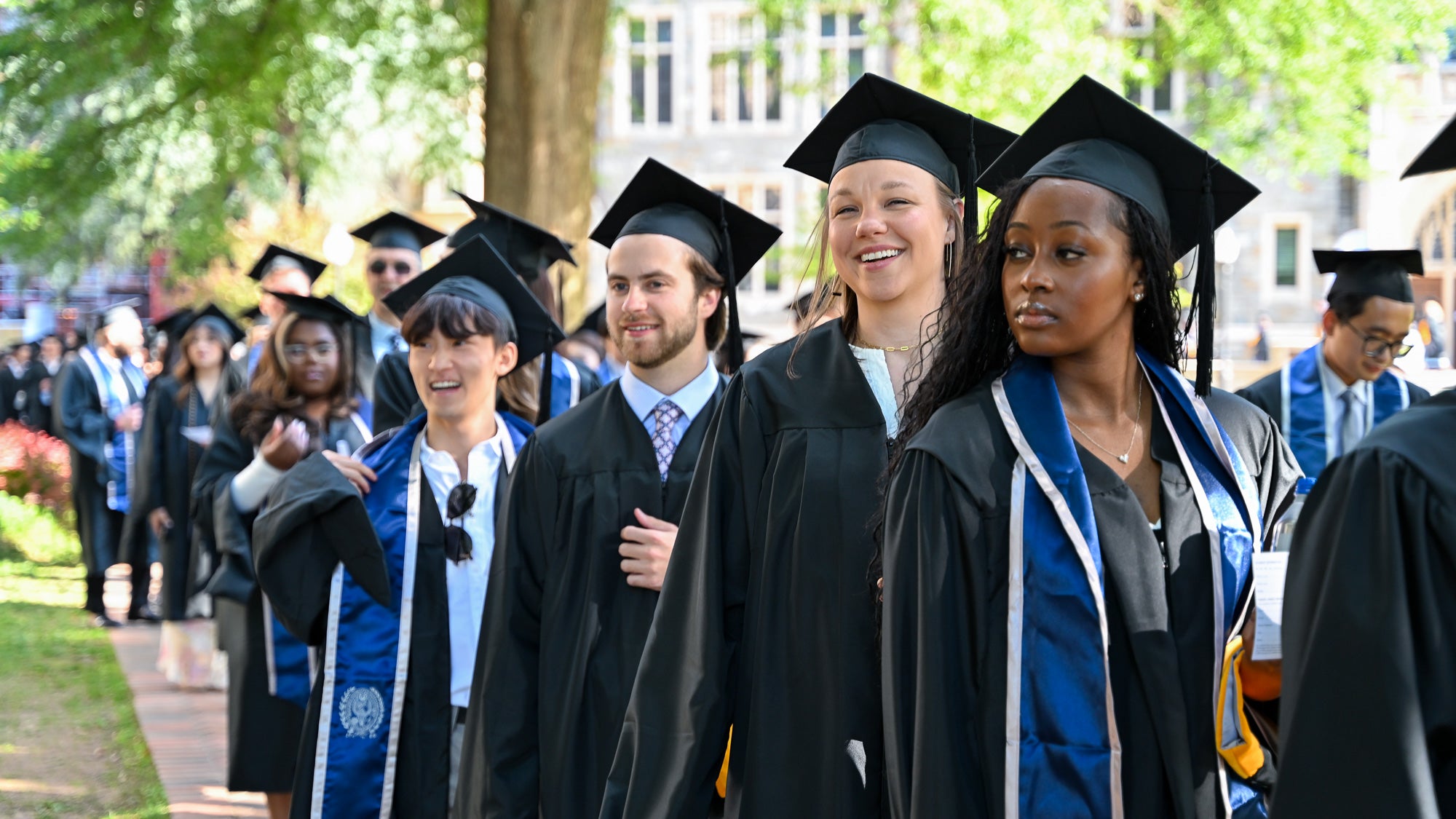
Alumni, News
BGE in Photos: M.S. Graduates in the Class of 2026
Congratulations to the Class of 2026! Browse photos of our graduating BGE master’s students on the morning of Graduate Commencement, and in poster sessions and program parties.
May 15, 2026
Alumni, News
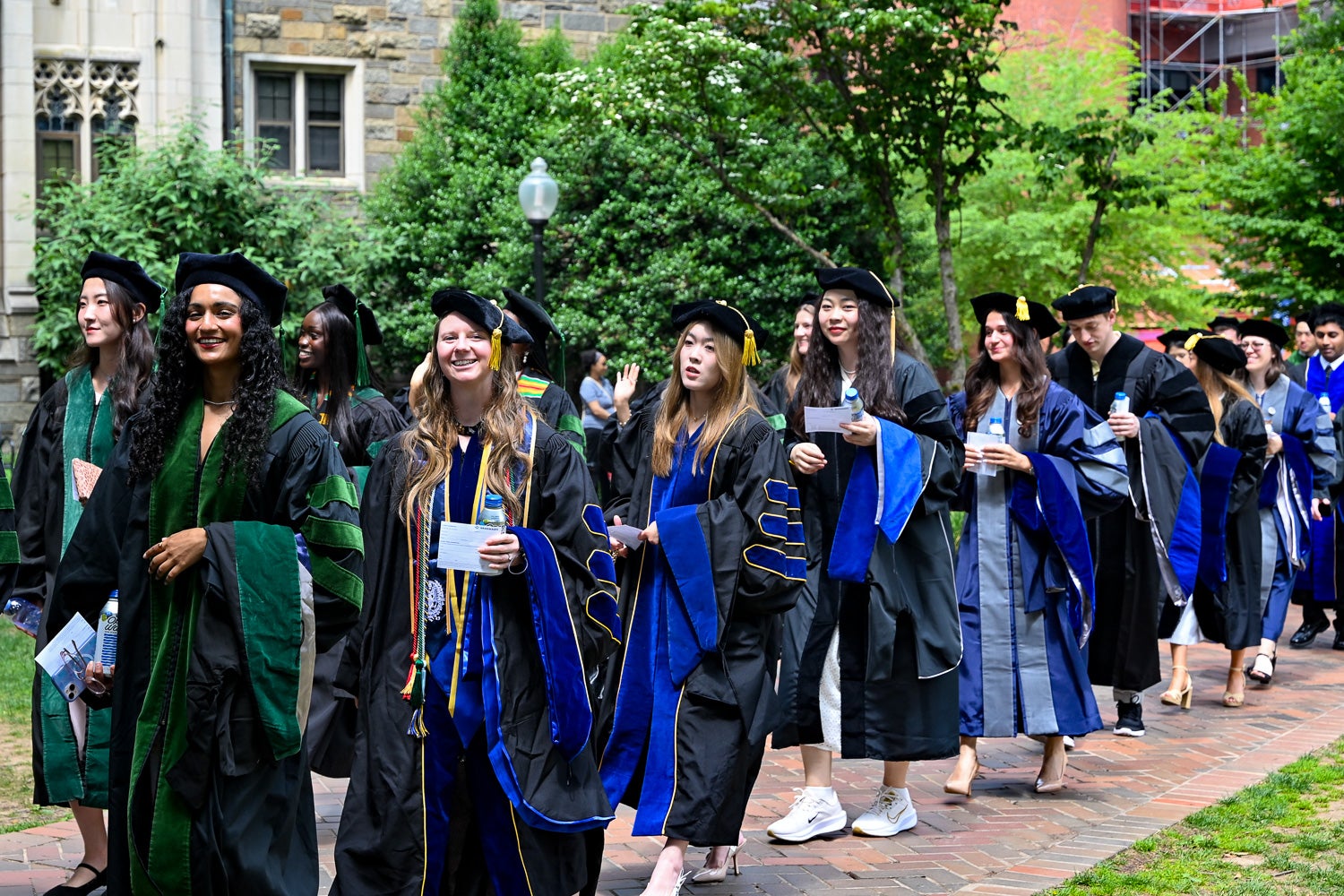
BGE in Photos: Ph.D. Graduates at the 2026 School of Medicine Commencement
Congratulations to the Class of 2026! Browse photos of our BGE Ph.D. graduates at the School of Medicine Commencement.
May 17, 2026
- Tagged
- Biochemistry and Molecular & Cellular Biology
- M.S. in Biochemistry & Molecular Biology
- M.S. in Biohazardous Threat Agents & Emerging Infectious Diseases
- Microbiology & Immunology
- Ph.D. in Biochemistry and Molecular & Cellular Biology
- Pharmacology & Physiology
- Special Master's Program
- Systems Medicine